


Sender Score is a numerical metric ranging from 0 to 100 that measures email sending reputation. This score determines the probability of email delivery to recipients’ primary inboxes versus spam folders. The metric evaluates sending behavior patterns over time, with higher scores indicating established sender credibility and lower scores signaling potential deliverability obstacles.
Validity’s Trustworthiness Calculation provides supplementary analysis of email sending practices. This system evaluates multiple data points including recipient engagement rates, spam complaint frequencies, and email list quality metrics.
The integration of Sender Score and Trustworthiness Calculation delivers comprehensive reputation assessment data for optimizing email delivery performance and strategic planning.
Key Takeaways
- Sender Score and Validity’s Trustworthiness Calculation are key metrics used to evaluate the reputation and reliability of email senders.
- These scores significantly influence email deliverability, affecting whether emails reach recipients’ inboxes or get filtered as spam.
- Factors impacting these scores include sending volume, complaint rates, bounce rates, and engagement metrics.
- Improving these scores involves best practices like maintaining clean lists, consistent sending patterns, and monitoring feedback loops.
- Understanding and managing these scores is crucial for effective email marketing, reputation management, and future-proofing email campaigns.
The Importance of Sender Score and Validity’s Trustworthiness Calculation
Understanding the importance of Sender Score and Validity’s Trustworthiness Calculation is essential for anyone involved in email marketing.
These metrics not only influence your email deliverability but also impact your overall marketing success.
A high Sender Score can lead to improved inbox placement rates, ensuring that your messages reach your audience effectively.
Conversely, a low score can result in emails being relegated to spam folders, significantly diminishing the chances of engagement with your content. Moreover, these calculations play a pivotal role in maintaining a positive sender reputation. In an era where consumers are increasingly wary of unsolicited emails, having a strong reputation is vital for building trust with your audience.
By monitoring and improving your Sender Score and Validity’s Trustworthiness Calculation, you can foster better relationships with your subscribers, ultimately leading to higher open rates, click-through rates, and conversions.
How Sender Score and Validity’s Trustworthiness Calculation is Calculated
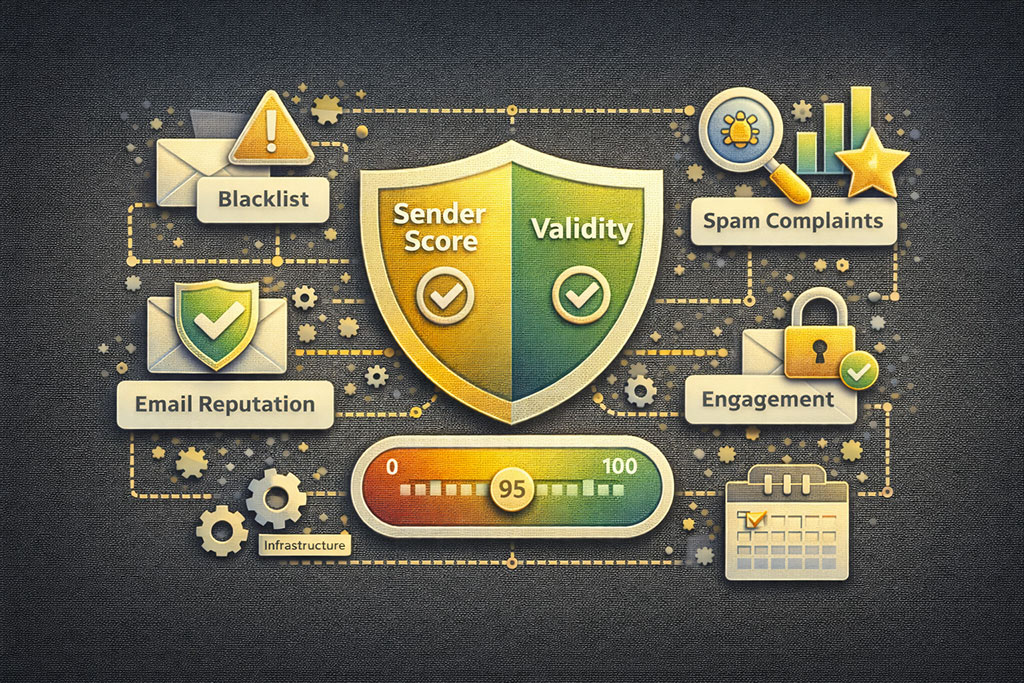
The calculation of Sender Score involves analyzing various data points related to your email sending practices. Internet Service Providers (ISPs) and email service providers (ESPs) gather information about your sending history, including bounce rates, complaint rates, and engagement metrics. These data points are then aggregated to produce a score that reflects your overall reputation as an email sender.
The more positive interactions you have with recipients—such as high open rates and low complaint rates—the higher your Sender Score will be. Validity’s Trustworthiness Calculation takes a similar approach but focuses on additional factors that contribute to the health of your email list. This includes assessing the validity of email addresses on your list, monitoring engagement levels, and evaluating how often recipients interact with your emails.
By analyzing these elements, Validity provides a comprehensive view of your trustworthiness as a sender, allowing you to identify areas for improvement and optimize your email marketing efforts.
Factors that Affect Sender Score and Validity’s Trustworthiness Calculation
Several factors can influence both Sender Score and Validity’s Trustworthiness Calculation. One of the most significant is the quality of your email list. If you frequently send emails to invalid or inactive addresses, it can lead to high bounce rates and complaints, negatively impacting your score.
Therefore, maintaining a clean and engaged email list is crucial for achieving a favorable reputation. Another critical factor is engagement metrics. High open rates and click-through rates signal to ISPs that recipients find value in your emails, which can positively affect your Sender Score.
Conversely, if recipients consistently ignore or mark your emails as spam, it can lead to a decline in both scores. Additionally, the frequency of your email sends plays a role; sending too many emails in a short period can overwhelm recipients and lead to increased unsubscribes or complaints.
Understanding the Impact of Sender Score and Validity’s Trustworthiness Calculation on Email Deliverability
| Complaint Rate | Percentage of recipients marking your emails as spam | 0% – 100% | Higher complaint rates lower your score |
| Spam Trap Hits | Number of emails sent to spam traps (invalid or honeypot addresses) | Count (0 or more) | Any hits significantly reduce your score |
| Unknown User Rate | Percentage of emails sent to non-existent addresses | 0% – 100% | Higher rates decrease your score |
| Mail Server IP Reputation | Reputation of the sending IP based on past behavior | Good / Neutral / Poor | Good reputation increases score; poor lowers it |
| Volume Consistency | Stability of email sending volume over time | Consistent / Fluctuating | Consistent volume supports higher score |
| Authentication | Use of SPF, DKIM, and DMARC protocols | Enabled / Disabled | Proper authentication improves score |
| Engagement Rate | Percentage of recipients opening or interacting with emails | 0% – 100% | Higher engagement boosts score |
| Blacklistings | Presence of sending IP/domain on email blacklists | Listed / Not Listed | Being listed lowers score significantly |
| Sender Score | Overall trustworthiness score calculated by Validity | 0 – 100 | Higher scores indicate better sender reputation |
The impact of Sender Score and Validity’s Trustworthiness Calculation on email deliverability cannot be overstated. A high Sender Score increases the likelihood that your emails will land in the inbox rather than the spam folder. ISPs use these scores as part of their filtering algorithms to determine whether to accept or reject incoming emails.
Therefore, maintaining a strong score is essential for ensuring that your messages reach their intended recipients. Furthermore, Validity’s Trustworthiness Calculation enhances this process by providing additional insights into the health of your email list. If your trustworthiness score is low due to poor engagement or high complaint rates, even a high Sender Score may not guarantee successful delivery.
By understanding how these metrics interact, you can take proactive steps to improve both scores and enhance overall deliverability.
How to Improve Sender Score and Validity’s Trustworthiness Calculation
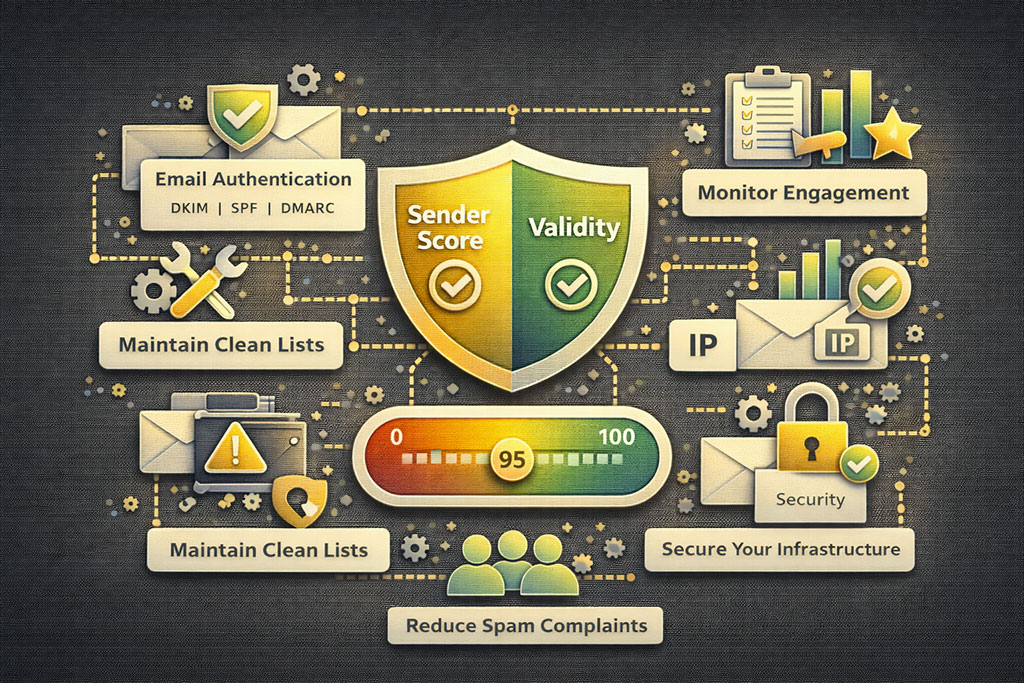
Improving your Sender Score and Validity’s Trustworthiness Calculation requires a strategic approach focused on best practices in email marketing. One effective method is to regularly clean your email list by removing inactive subscribers and invalid addresses. This practice not only reduces bounce rates but also enhances engagement metrics, contributing positively to both scores.
Additionally, focusing on content quality is paramount. Crafting engaging subject lines and providing valuable content encourages recipients to open and interact with your emails. Monitoring engagement metrics closely allows you to identify trends and adjust your strategies accordingly.
Furthermore, consider implementing double opt-in processes for new subscribers to ensure that they genuinely want to receive your emails, which can further enhance your reputation as a sender.
Common Misconceptions about Sender Score and Validity’s Trustworthiness Calculation
There are several misconceptions surrounding Sender Score and Validity’s Trustworthiness Calculation that can lead to confusion among marketers. One common myth is that a high Sender Score guarantees successful email delivery. While a high score certainly increases the likelihood of inbox placement, it is not an absolute guarantee; other factors such as content quality and recipient engagement also play significant roles.
Another misconception is that these scores are static and do not change over time. In reality, both Sender Score and Validity’s Trustworthiness Calculation are dynamic metrics that fluctuate based on your sending behavior and recipient interactions. This means that consistent monitoring and proactive adjustments are necessary to maintain or improve these scores over time.
The Role of Sender Score and Validity’s Trustworthiness Calculation in Email Marketing
In the realm of email marketing, Sender Score and Validity’s Trustworthiness Calculation serve as foundational elements for success. They provide valuable insights into how well you are connecting with your audience and whether your messages are being received positively. By understanding these metrics, you can tailor your strategies to enhance engagement and build stronger relationships with subscribers.
Moreover, these scores can inform broader marketing decisions beyond just email campaigns. For instance, if you notice a decline in your Sender Score, it may prompt you to reevaluate your overall marketing strategy or consider investing in list hygiene practices. Ultimately, leveraging these metrics allows you to create more effective campaigns that resonate with your audience while maintaining a positive sender reputation.
How Sender Score and Validity’s Trustworthiness Calculation Affects Reputation Management
Reputation management is critical in today’s digital landscape, especially for businesses relying on email marketing as a primary communication channel. Your Sender Score and Validity’s Trustworthiness Calculation directly influence how ISPs perceive you as a sender. A strong reputation can lead to better deliverability rates, while a tarnished reputation can result in significant challenges in reaching your audience.
To effectively manage your reputation, it is essential to monitor these scores regularly and take proactive measures when necessary. This may involve addressing any issues that arise—such as high complaint rates or low engagement levels—before they escalate into more significant problems. By prioritizing reputation management through careful attention to these metrics, you can safeguard your ability to communicate effectively with your audience.
The Future of Sender Score and Validity’s Trustworthiness Calculation
As the digital landscape continues to evolve, so too will the methodologies behind Sender Score and Validity’s Trustworthiness Calculation. With advancements in technology and changes in consumer behavior, ISPs will likely refine their algorithms for assessing sender reputation. This means that staying informed about industry trends and adapting your strategies accordingly will be crucial for maintaining strong scores.
Additionally, as privacy regulations become more stringent, marketers may need to navigate new challenges related to data collection and consent. Understanding how these changes impact sender reputation will be vital for ensuring compliance while still achieving effective email marketing outcomes.
Resources for Monitoring and Improving Sender Score and Validity’s Trustworthiness Calculation
To effectively monitor and improve your Sender Score and Validity’s Trustworthiness Calculation, several resources are available at your disposal. Email service providers often offer built-in analytics tools that allow you to track key metrics related to engagement and deliverability. Additionally, third-party services specialize in providing detailed insights into sender reputation and offer recommendations for improvement.
Engaging with online communities or forums dedicated to email marketing can also provide valuable insights from industry peers who have faced similar challenges. By leveraging these resources, you can stay informed about best practices while continuously optimizing your email marketing strategies for better results. In conclusion, understanding Sender Score and Validity’s Trustworthiness Calculation is essential for anyone involved in email marketing today.
By recognizing their importance, calculating methods, influencing factors, impacts on deliverability, improvement strategies, misconceptions, roles in marketing, reputation management implications, future trends, and available resources—you’re well-equipped to navigate the complexities of email marketing successfully.
Understanding your Sender Score is crucial for maintaining a good reputation in email marketing, as it directly impacts your deliverability and trustworthiness. For those looking to enhance their email marketing strategies, you might find the article on how marketing automation can help you get back an extra day a week particularly insightful. It discusses how automation can streamline your processes, allowing you to focus on improving your Sender Score and overall email performance.
FAQs
What is a Sender Score?
Sender Score is a numerical reputation rating assigned to an IP address that sends email. It ranges from 0 to 100 and indicates the trustworthiness of the sender based on their email sending practices and history.
Who provides the Sender Score?
Sender Score is provided by Validity, a company specializing in email deliverability and data quality solutions.
How is the Sender Score calculated?
Validity calculates Sender Score by analyzing various factors such as complaint rates, spam trap hits, email volume, and recipient engagement to assess the sender’s reputation and trustworthiness.
Why is Sender Score important?
Sender Score helps email service providers determine whether to deliver, filter, or block emails from a particular sender. A higher score generally means better email deliverability and trust.
Can Sender Score affect email deliverability?
Yes, a low Sender Score can lead to emails being marked as spam or blocked, while a high Sender Score improves the chances of emails reaching the recipient’s inbox.
How often is Sender Score updated?
Sender Score is typically updated on a daily basis to reflect the most current sending behavior and reputation of the IP address.
Is Sender Score the only factor in email deliverability?
No, while Sender Score is an important indicator, email deliverability also depends on other factors such as email content, recipient engagement, authentication protocols, and domain reputation.
Can I check my Sender Score?
Yes, Validity offers tools that allow senders to check their Sender Score and monitor their email reputation.
What can I do to improve my Sender Score?
To improve Sender Score, senders should maintain good list hygiene, avoid spam complaints, monitor bounce rates, engage recipients with relevant content, and follow email best practices.
Does Sender Score apply to individual email addresses or IP addresses?
Sender Score is assigned to the IP address used to send emails, not to individual email addresses. Therefore, the reputation is tied to the sending infrastructure.