

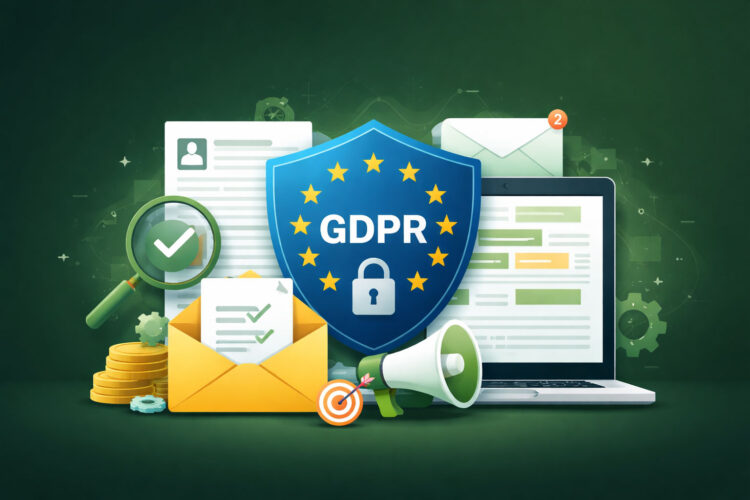
You stand on the precipice of a complex yet crucial aspect of modern digital marketing: GDPR and its intricate dance with email campaigns. This guide is designed to illuminate the path forward, transforming what might appear as a labyrinth of legal jargon into a clear, actionable roadmap for your email marketing endeavors. Think of GDPR not as a barrier, but as a framework for building trust and fostering more meaningful relationships with your audience.
Before you even consider crafting your next campaign, you must grasp the fundamental principles of the General Data Protection Regulation (GDPR). Enacted by the European Union (EU), this legislation serves as a robust shield, protecting the personal data of individuals within the EU and European Economic Area (EEA). Its reach extends far beyond geographical borders; if your email marketing activities involve data subjects residing in the EU/EEA, regardless of your company’s location, you are subject to its provisions.
What is Personal Data Under GDPR?
Under GDPR, personal data is a broad category encompassing any information relating to an identified or identifiable natural person. This extends beyond obvious identifiers like names and addresses to include IP addresses, email addresses, cookie identifiers, and even anonymized data that, when combined with other information, could lead to identification. Effectively, if you can link a piece of information to a living individual, it’s likely personal data.
The Seven Principles of GDPR
GDPR is built upon seven core principles that act as guiding stars for data processing. Understanding these principles is paramount to achieving compliance:
- Lawfulness, Fairness, and Transparency: Your data processing must have a legitimate basis, be conducted equitably, and be clearly communicated to individuals. This is the cornerstone of trust.
- Purpose Limitation: You must collect personal data for specified, explicit, and legitimate purposes and not further process it in a manner incompatible with those purposes. No data mining for unknown future uses.
- Data Minimisation: You should only collect data that is adequate, relevant, and limited to what is necessary for the purposes for which it is processed. Think of it as pruning a tree – remove only what’s essential for healthy growth.
- Accuracy: Personal data must be accurate and, where necessary, kept up to date. Inaccurate data can lead to skewed results and frustrated customers.
- Storage Limitation: Personal data should be retained only for as long as necessary for the purposes for which it is processed. Don’t hoard data like a digital dragon; dispose of it responsibly when its purpose is fulfilled.
- Integrity and Confidentiality (Security): This principle mandates that personal data be processed in a manner that ensures appropriate security, including protection against unauthorized or unlawful processing and against accidental loss, destruction, or damage, using appropriate technical or organizational measures.
- Accountability: You, as the data controller, are responsible for demonstrating compliance with the above principles. This means keeping meticulous records and being able to prove your adherence.
Lawful Basis for Email Marketing: Your Permission Slip
One of the most critical aspects of GDPR for email marketing is establishing a lawful basis for processing personal data. Without this, your campaigns operate on shaky ground, susceptible to fines and reputational damage. While several lawful bases exist, two are predominantly relevant to email marketing: consent and legitimate interest.
The Gold Standard: Consent
Consent is often considered the safest and most robust lawful basis for email marketing, especially for unsolicited communications. For consent to be valid under GDPR, it must be:
- Freely Given: Individuals must have a genuine choice, without coercion or pressure. Opt-out pre-checked boxes are a relic of the past; active affirmation is required.
- Specific: Consent must be given for clearly defined purposes. You cannot ask for general consent; you must specify, for example, “to receive marketing emails about new product releases” or “to receive weekly newsletters.”
- Informed: Individuals must be fully aware of what they are consenting to, including your identity, the purposes of processing, the types of data collected, and their right to withdraw consent. Transparency is key.
- Unambiguous: Consent must be indicated by a clear affirmative action. This means a positive opt-in, such as ticking an unchecked box or clicking a “subscribe” button. Silence, pre-ticked boxes, or inactivity do not constitute consent.
You must also make it easy for individuals to withdraw their consent at any time, just as easily as they gave it. This typically means including a clear unsubscribe link in every email.
The Balancing Act: Legitimate Interest
Legitimate interest can be a viable alternative to consent for certain email marketing activities, particularly for existing customers. However, it requires a careful balancing act, and you must conduct a Legitimate Interest Assessment (LIA) to demonstrate its validity. To rely on legitimate interest, you must show:
- A Legitimate Interest: You have a genuine, lawful reason for processing the data. This could be promoting similar products or services to existing customers.
- Necessity: The processing is necessary to achieve that legitimate interest. You couldn’t achieve your goal through less intrusive means.
- Balance: Your legitimate interest does not override the fundamental rights and freedoms of the individuals whose data you are processing. This is where the balancing act comes in. You must weigh your interest against their privacy rights.
Consider a scenario where you have an existing customer who purchased a specific product. Using legitimate interest to send them emails about accessories relevant to that product might be justifiable. However, sending them emails about entirely unrelated product categories would likely not pass the legitimate interest test. Remember, the burden of proof for legitimate interest rests squarely on your shoulders.
Crafting Compliant Email Capture Forms: Your Digital Welcome Mat

Your email capture forms are the front lines of your GDPR compliance efforts for email marketing. They are the gateway through which individuals provide their personal data, and as such, they must adhere to stringent requirements.
Best Practices for Opt-In Forms
- Clear and Concise Language: Avoid jargon. Use plain language that everyone can understand.
- Unchecked Opt-In Boxes: Never pre-tick a subscription box. Individuals must actively choose to opt-in.
- Granular Consent Options: If you offer different types of email content (e.g., newsletters, promotions, product updates), provide separate checkboxes for each. This allows individuals to tailor their experience.
- Privacy Policy Link: Prominently display a link to your full privacy policy. This policy should detail how you collect, use, store, and protect personal data, and how individuals can exercise their rights.
- Details on What to Expect: Briefly explain what subscribers will receive and how often. For example, “Receive our weekly newsletter featuring expert tips and exclusive offers.”
- Double Opt-In (Recommended): While not strictly mandated by GDPR, implementing a double opt-in process is highly recommended. This involves sending a confirmation email to new subscribers, requiring them to click a link to verify their subscription. This adds an extra layer of proof of consent and helps prevent spam traps.
Avoiding Common Pitfalls
- “Soft Opt-In” Assumptions: Do not assume an individual has opted in simply because they provided their email for another purpose, like a download or a purchase. Explicit consent for marketing communications is still required.
- Bundled Consent: Avoid bundling consent for email marketing with consent for other data processing activities. Each purpose requires separate, specific consent.
- Confusing Language: Ambiguous or misleading language on your forms can invalidate consent. Be direct and transparent.
Managing Subscriber Data: The Digital Vault

Once you’ve diligently collected subscriber data, the responsibility of managing it compliantly falls upon your shoulders. This involves more than just storing email addresses; it encompasses the entire lifecycle of that data.
Data Storage and Security
- Secure Storage: Ensure your email marketing platform and any associated databases have robust security measures in place. This includes encryption, access controls, and regular security audits.
- Data Minimisation in Practice: Only store the data you genuinely need for your email marketing purposes. If you asked for a name and then only address your emails generally, you might be holding unnecessary data.
- Data Processing Agreements (DPAs): If you use third-party email marketing services (e.g., Mailchimp, HubSpot), you must have a Data Processing Agreement (DPA) in place with them. This contract outlines their obligations as a data processor and ensures they also adhere to GDPR standards.
Exercising Data Subject Rights
GDPR empowers individuals with several rights regarding their personal data, and you must be prepared to facilitate these:
- Right to Access: Individuals can request a copy of the personal data you hold about them. You must provide this in a timely and intelligible manner.
- Right to Rectification: If their data is inaccurate, individuals have the right to have it corrected.
- Right to Erasure (“Right to Be Forgotten”): Individuals can request the deletion of their personal data under certain circumstances (e.g., if the data is no longer necessary for the purpose it was collected, or they withdraw consent).
- Right to Restriction of Processing: Individuals can request that you limit the way you use their data.
- Right to Data Portability: Individuals have the right to receive their personal data in a structured, commonly used, and machine-readable format, and to transmit that data to another controller.
- Right to Object: Individuals have the right to object to the processing of their personal data, particularly when processing is based on legitimate interest or for direct marketing purposes.
You must have clear, accessible procedures for individuals to exercise these rights. This often involves a dedicated email address or a specific section on your website.
International Data Transfers: Navigating Global Waters
| Metric | Description | Importance for Marketers | GDPR Requirement |
|---|---|---|---|
| Consent Rate | Percentage of users who explicitly opt-in to receive marketing emails | High – Ensures a qualified and engaged email list | Must obtain clear, affirmative consent before sending emails |
| Unsubscribe Rate | Percentage of recipients who opt-out from email communications | Medium – Indicates relevance and satisfaction of content | Must provide an easy and free way to unsubscribe in every email |
| Data Retention Period | Length of time personal data is stored | High – Minimizes risk and complies with data minimization principles | Personal data should not be kept longer than necessary |
| Data Subject Access Requests (DSARs) | Number of requests from individuals to access their personal data | Medium – Reflects transparency and trustworthiness | Must respond to DSARs within one month |
| Data Breach Notification Time | Time taken to notify authorities and affected individuals after a breach | High – Critical for compliance and damage control | Notify within 72 hours of becoming aware of a breach |
| Email Open Rate | Percentage of recipients who open marketing emails | Medium – Measures engagement but must be GDPR compliant | Tracking must be transparent and consented to |
| Third-Party Data Sharing | Extent of sharing personal data with external partners | High – Must ensure partners comply with GDPR | Requires clear agreements and user consent |
If your audience extends beyond the EU/EEA, or if your email marketing service provider stores data outside these regions, you enter the realm of international data transfers. This area is particularly complex and requires careful consideration.
Mechanisms for Lawful Data Transfer
- Adequacy Decisions: The European Commission can deem certain non-EU countries as providing an “adequate” level of data protection. Transfers to these countries are generally permitted.
- Standard Contractual Clauses (SCCs): These are pre-approved contractual clauses that data exporters and importers can sign, obligating them to protect personal data to EU standards. SCCs are widely used for transfers to countries without an adequacy decision.
- Binding Corporate Rules (BCRs): For multinational organizations, BCRs are internal rules approved by data protection authorities, allowing intra-group transfers of personal data across borders.
- Derogations: In specific circumstances, GDPR allows for transfers outside these mechanisms, such as with explicit consent from the data subject for the specific transfer, or when necessary for the performance of a contract. However, these are typically used for ad-hoc transfers, not routine email marketing.
It is your responsibility to understand where your data is stored and processed and to ensure appropriate safeguards are in place for any international transfers. Regular communication with your email service provider regarding their data processing locations and mechanisms for international transfers is essential.
GDPR Compliance: An Ongoing Journey, Not a Destination
Achieving GDPR compliance for email marketing is not a one-time task; it’s an ongoing commitment. The digital landscape evolves, and so too might interpretations of GDPR or the services you utilize.
Regular Audits and Reviews
- Periodically review your data collection processes: Are your opt-in forms still compliant? Has anything changed in your business that might affect your lawful basis for processing?
- Audit your privacy policy: Ensure it remains accurate and up-to-date with your current data processing activities.
- Review your data retention policies: Are you still adhering to the principle of storage limitation? Are you holding onto data for longer than necessary?
- Test your data subject rights processes: Can individuals easily exercise their rights, and are your internal procedures robust enough to handle their requests efficiently?
Documentation and Record-Keeping
The accountability principle of GDPR demands thorough documentation. You must be able to demonstrate your compliance efforts. This includes:
- Records of consent: Keep clear records of when and how individuals gave their consent, including timestamps and the specific wording used on your opt-in forms.
- Details of Legitimate Interest Assessments (LIAs): If relying on legitimate interest, document your assessments thoroughly.
- Records of data breaches (and mitigation): Track any security incidents involving personal data, even minor ones, and detail your response.
- Data protection impact assessments (DPIAs): For high-risk processing activities, you may need to conduct a DPIA.
- Contracts with data processors: Maintain copies of all DPAs with third-party service providers.
Think of this documentation as your compliance journal. It’s not just a box-ticking exercise; it’s a vital tool for demonstrating your commitment to data protection and a safeguard in the event of an inquiry from a data protection authority.
By embracing GDPR as a framework for responsible data stewardship, you can move beyond mere compliance to build a stronger, more trustworthy relationship with your email subscribers. You are not just sending emails; you are communicating with individuals who have entrusted you with their personal information. Honor that trust, and your email marketing efforts will flourish on a foundation of integrity.
FAQs
What is GDPR and why is it important for email marketing?
GDPR, or the General Data Protection Regulation, is a European Union law that governs data protection and privacy. It is important for email marketing because it sets strict rules on how businesses must collect, store, and use personal data, including email addresses, to protect individuals’ privacy rights.
Do marketers need consent before sending marketing emails under GDPR?
Yes, under GDPR, marketers must obtain explicit and informed consent from individuals before sending marketing emails. This means users must actively opt-in, and pre-checked boxes or implied consent are not sufficient.
What information must be included in marketing emails to comply with GDPR?
Marketing emails must clearly identify the sender, provide a valid contact address, and include an easy-to-use option for recipients to withdraw their consent or unsubscribe from future emails.
How should marketers handle personal data collected for email marketing?
Marketers must ensure that personal data is collected lawfully, stored securely, and used only for the purposes consented to by the individual. They must also respect data minimization principles and retain data only as long as necessary.
What are the consequences of non-compliance with GDPR in email marketing?
Non-compliance with GDPR can result in significant fines, which can be up to 4% of a company’s annual global turnover or €20 million, whichever is higher. Additionally, businesses may suffer reputational damage and loss of customer trust.