

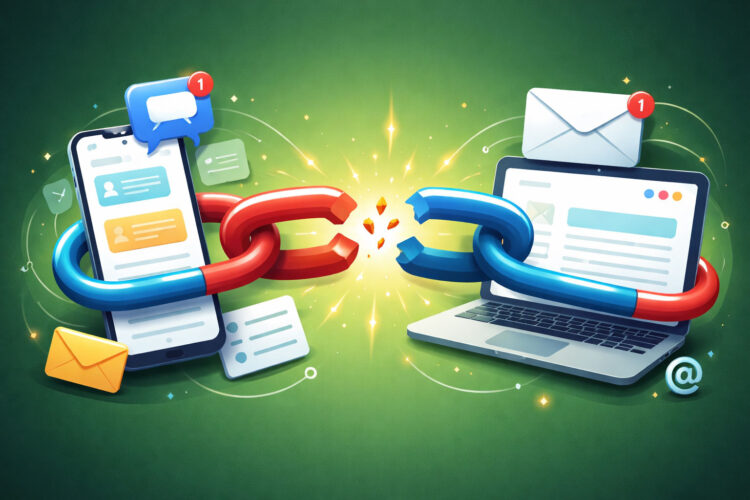
The phrase “digital communication” often conjures an image of seamless information flow. However, many organizations and individuals encounter a significant hurdle: the lack of synchronization between Short Message Service (SMS) and email channels. This disconnect can lead to inefficiencies, communication gaps, and a fragmented user experience. Understanding the underlying causes and potential solutions is crucial for optimizing digital outreach strategies.
SMS and email, while both asynchronous communication methods, evolved from distinct paradigms, shaping their inherent capabilities and limitations. These foundational differences are a primary driver of the sync problem.
Message Length and Structure Constraints
SMS, originating from telephony networks, was designed for brevity. Initially limited to 160 characters, though modern advancements allow for concatenation, this constraint still influences its primary use cases. Email, conversely, began as a digital letter, accommodating virtually unlimited text, rich media, and complex formatting.
- Impact on Content: The brevity of SMS necessitates concise, actionable messages. Email allows for detailed explanations, attachments, and visual elements. Attempting to force an email’s content into an SMS, or vice versa, often results in poor user experience or loss of vital information.
- User Expectations: Users generally expect immediate, short updates via SMS. For email, they anticipate more comprehensive information that may require longer processing or reading times.
Delivery Mechanisms and Protocols
The technical infrastructure supporting SMS and email are fundamentally different. SMS relies on cellular networks and protocols like SS7 (Signaling System No. 7) for delivery. Email uses internet protocols such as SMTP (Simple Mail Transfer Protocol), POP3 (Post Office Protocol 3), and IMAP (Internet Message Access Protocol) over IP networks.
- Reliability vs. Reach: SMS delivery is often highly reliable due, in part, to its direct integration with cellular infrastructure and a relatively simple delivery chain. Email, while enjoying broader global reach through the internet, can be subject to spam filters, network latency, and server issues, introducing potential delays or non-delivery.
- Asynchronous Nature: Both are asynchronous, meaning the sender and receiver do not need to be online simultaneously. However, the pathways for message travel are distinct, acting like separate rivers flowing to the same ocean, each with its own currents and obstacles.
User Interface and Interaction Models
The interfaces through which users interact with SMS and email are typically disparate. SMS is accessed through native messaging applications on mobile devices. Email is accessed via dedicated email clients or web interfaces.
- Mobile-First vs. Multi-Platform: SMS is inherently mobile-centric. Email, while heavily used on mobile, also has robust desktop and web interfaces, offering a broader range of interaction possibilities.
- Threading and Conversation Management: Email clients often provide sophisticated threading and archiving capabilities, allowing users to track entire conversations. SMS, while capable of threading, often presents a more simplistic, linear view of message exchanges.
The foundational design principles of SMS emphasize brevity, immediacy, and direct mobile interaction, while email prioritizes detailed communication, rich content, and cross-platform accessibility. These divergent paths, while individually effective, contribute to the challenges of unified channel management.
If you’re struggling with the synchronization of your SMS and email channels, you might find it helpful to read the article titled “The Importance of Omnichannel Communication for Businesses.” This article delves into the challenges companies face when trying to integrate various communication platforms and offers practical solutions to ensure a seamless experience for customers. For more insights, check out the article here.
Technical Barriers to Integration
Beyond fundamental design, several technical obstacles impede the seamless synchronization of SMS and email streams. These barriers relate to data standardization, API availability, and the inherent complexity of integrating disparate systems.
Lack of Standardized Data Formats
Data exchanged via SMS and email often adheres to different implicit or explicit formatting conventions. SMS typically deals with plain text, sometimes with embedded links. Email, on the other hand, embraces HTML, rich text, and attachments, along with structured metadata in headers.
- Information Fidelity: Converting an HTML email with embedded images and precise formatting into an SMS often means stripping away critical information, reducing it to a plain text shell. The reverse, while less problematic in terms of information loss, doesn’t add value unless specific email features are intended to replicate SMS behavior.
- Metadata Discrepancies: Email headers contain extensive metadata (sender, receiver, subject, date, message IDs, etc.). SMS messages have a more limited set of associated metadata (sender number, receiver number, timestamp). Merging these disparate sets of metadata into a unified record presents a challenge.
API and System Silos
Many organizations operate SMS gateways and email marketing platforms as separate, often proprietary systems. These systems are frequently developed by different vendors using distinct technologies and may not always offer robust, well-documented APIs (Application Programming Interfaces) for deep integration.
- Vendor Lock-in: Relying on different vendors for each channel can lead to vendor lock-in, where integrating their specific platforms becomes a custom and potentially costly endeavor.
- API Inconsistencies: Even when APIs exist, they may offer varying levels of functionality, require different authentication methods, or have inconsistent data structures, making unified programming challenging. Imagine trying to drive two separate cars with entirely different dashboards and control layouts simultaneously.
Security and Privacy Protocols
SMS and email channels employ different security and privacy mechanisms. Email benefits from protocols like TLS (Transport Layer Security) for encryption during transit, and sender authentication methods like SPF (Sender Policy Framework), DKIM (DomainKeys Identified Mail), and DMARC (Domain-based Message Authentication, Reporting, and Conformance). SMS, while inherently secure within the cellular network, generally offers less end-to-end encryption or sender authentication at the application layer unless specific secure messaging protocols are layered on top.
- Consent Management: Regulatory requirements (e.g., GDPR, CCPA) for obtaining and managing user consent for communication differ between SMS and email. Users often opt-in separately for each channel. Synchronizing consent across channels without proper controls can lead to compliance violations.
- Data Handling and Storage: The way personal data is handled and stored by SMS providers versus email providers can differ, posing challenges for maintaining a unified and compliant data repository, especially when dealing with sensitive information.
The technical intricacies, from divergent data formats to fragmented systems and varying security paradigms, form a significant hurdle to achieving a truly synchronized communication environment. Addressing these requires a deliberate strategy for integration and data harmonization.
User Behavior and Expectations

The decision to use SMS versus email often reflects distinct user behaviors and expectations regarding message urgency, formality, and required action. This behavioral divergence further complicates efforts to simply mirror content across channels.
Urgency and Immediacy of Information
Users typically associate SMS with urgent, time-sensitive, and critical information. Email, while capable of conveying urgency, is often perceived as a channel for more comprehensive, less immediate communications.
- Interrupt vs. Inform: An SMS is often an “interrupt” notification, demanding immediate attention (e.g., password reset, delivery update, appointment reminder). An email is more frequently an “inform” message, providing details that can be reviewed at the user’s convenience (e.g., newsletter, marketing offer, order confirmation).
- Channel Preference for Critical Alerts: For truly critical alerts (e.g., system outages, security breaches), SMS often serves as a primary, high-priority fallback if email delivery is compromised or delayed.
Preferred Interaction Styles
The way users interact with SMS and email differs significantly, influencing their expectations for message content and subsequent actions.
- Concise Action: SMS encourages brief, direct interactions, often involving a simple reply (e.g., “Y” to confirm, “STOP” to unsubscribe) or clicking a short link. Long, multi-paragraph responses are rare via SMS.
- Detailed Engagement: Email supports richer interaction, allowing for longer replies, forwarding, archiving, and detailed review of attached documents or embedded multimedia. It facilitates multi-turn conversations and collaborative workflows that SMS cannot.
- Context Switching: Users are less likely to want to switch contexts (e.g., from a message to a browser tab) simply to read a full message from an SMS, whereas email often serves as a hub for such transitions.
Notification Fatigue and Channel Overload
Users are increasingly sensitive to the volume and relevance of digital communications. Sending identical messages across both SMS and email—what might be perceived as over-communication—can lead to notification fatigue and, ultimately, unsubscribes or channel blocking.
- Avoiding Redundancy: A key principle of effective communication is to avoid unnecessary repetition. If the same message arrives via two channels, users may feel harassed rather than well-informed, diminishing the perceived value of both channels.
- Strategic Channel Selection: Organizations must strategically choose the appropriate channel based on the message’s nature, urgency, and user preference, rather than blindly broadcasting it across all available touchpoints. Sending a promotional newsletter via SMS, for example, is often viewed as intrusive.
Understanding and respecting these user behaviors and expectations is paramount. A truly synchronized approach doesn’t mean identical communication across channels, but rather an intelligent, context-aware routing of information that aligns with how and why users engage with each medium.
Business and Strategic Considerations

The decision to integrate or maintain separation between SMS and email channels often involves broader business and strategic considerations, including cost, resource allocation, and the overall customer experience strategy.
Cost Implications
The cost models for SMS and email differ substantially, influencing how organizations prioritize their use and integration.
- Per-Message Cost of SMS: SMS typically incurs a per-message cost, especially for outgoing messages. This makes high-volume, undifferentiated SMS campaigns expensive and encourages brevity.
- Volume-Based Email Costs: Email marketing platforms often charge based on subscriber count or email volume, but the per-message cost is considerably lower than SMS, especially for bulk sends. This cost differential reinforces the strategic distinction between the channels.
- Integration Development Costs: Developing custom integrations between SMS and email platforms requires engineering resources, which can be a significant upfront investment, particularly for organizations with complex legacy systems.
Resource Allocation and Expertise
Managing and optimizing both SMS and email channels effectively requires distinct skill sets and dedicated resources.
- Marketing and Technical Expertise: SMS campaigns often require succinct copywriting skills and an understanding of character limits. Email campaigns necessitate expertise in HTML, design, deliverability, and advanced analytics. Blending these skill sets or ensuring appropriate staffing can be a challenge.
- Operational Workflows: The operational workflows for managing opt-ins, compliance, sending, and reporting differ for each channel, requiring separate processes or a comprehensive system to unify them. Attempting to force a one-size-fits-all operational model can lead to inefficiencies.
Customer Experience Strategy
A fragmented approach to SMS and email can lead to a disjointed customer experience. Organizations striving for a unified customer journey must consider how these channels contribute to the overall narrative.
- Unified Customer View: Without integration, customer interactions via SMS may be siloed from their email interactions. This makes it difficult to build a holistic view of the customer’s communication journey and preferences. Imagine a fragmented map where some parts of the journey are on one sheet, and others are on another.
- Personalization Opportunities: Synchronization allows for more sophisticated personalization. For example, if a customer clicks a link in an email but doesn’t complete a purchase, a targeted SMS reminder could follow, using intelligence gathered from the email interaction.
- Maintaining Brand Voice: Ensuring a consistent brand voice and message across all channels, even when the content differs due to channel constraints, is crucial for fostering customer trust and recognition.
Strategic decisions regarding cost, resource allocation, and the overarching customer experience dictate the priority and extent to which SMS and email channels are integrated. Acknowledging these business realities is as important as understanding the technical components.
If you’re struggling with the integration of your SMS and email channels, you might find it helpful to explore a related article that delves into common pitfalls and solutions. Understanding the reasons behind these synchronization issues can significantly enhance your communication strategy. For more insights, check out this informative piece on SMS and Email Integration Tips to help streamline your messaging efforts and improve overall engagement.
Strategies for Harmonization and Integration
| Issue | Description | Common Causes | Impact on Marketing | Suggested Fix |
|---|---|---|---|---|
| Data Silos | SMS and email data stored separately without integration | Different platforms, lack of API connections | Inconsistent customer messaging, duplicated efforts | Implement unified CRM or data integration tools |
| Timing Mismatch | Messages sent at different times causing confusion | Manual scheduling, lack of automation | Reduced engagement, customer frustration | Use synchronized scheduling tools and automation |
| Contact List Discrepancies | Different contact lists for SMS and email | Separate subscription processes, outdated lists | Missed opportunities, inconsistent targeting | Consolidate contact lists and unify subscription management |
| Message Content Inconsistency | Different messaging tone or offers across channels | Lack of coordinated campaign planning | Brand confusion, lower conversion rates | Develop integrated campaign strategies |
| Technical Integration Issues | APIs or platforms not communicating properly | Outdated software, incompatible systems | Failed message delivery, data loss | Update software and ensure API compatibility |
While true “sinking” of SMS and email in the sense of interchangeable content is often impractical or undesirable, harmonization and intelligent integration are achievable. This involves strategic planning, technology adoption, and a user-centric approach.
Centralized Communication Platforms
Adopting a unified communication platform or a Customer Relationship Management (CRM) system with robust communication capabilities is a primary strategy for bridging the gap.
- Single Customer View: Such platforms pull communication data from various channels into a single customer profile, allowing businesses to track all interactions (SMS, email, calls, chat) in one place. This creates a “single source of truth” for customer engagement.
- Orchestration Tools: Advanced platforms offer workflow automation and orchestration tools that can trigger messages across channels based on user behavior or predefined rules. For instance, sending an email confirmation followed by an SMS reminder prior to an event.
- API-First Approach: Platforms built with an API-first approach facilitate easier integration with other business systems, providing flexibility in connecting existing SMS gateways and email service providers.
Intelligent Channel Routing
Instead of attempting to duplicate content, intelligent channel routing focuses on delivering the right message through the right channel at the right time, based on message urgency, content type, and user preferences.
- Preference Management Centers: Empowering users to explicitly state their preferred communication channel for different types of messages (e.g., SMS for urgent alerts, email for marketing updates) is crucial. This puts the user in control and reduces notification fatigue.
- Conditional Logic and Automation: Implementing automated rules that determine the optimal channel for a message. For example, a “forgot password” request might trigger an SMS with a one-time passcode and an email with a link for a more detailed reset process.
- A/B Testing Channel Effectiveness: Continuously testing which channel performs best for specific message types and audiences helps refine routing strategies for maximum impact and engagement.
Content Adaptation and Cross-Referencing
Rather than simple duplication, content should be adapted for each channel, with intelligent cross-referencing to provide a cohesive experience.
- SMS as a Gateway to Email: Use SMS messages as a concise alert or call to action that directs users to a more detailed email for further information. For example, an SMS “Your order has shipped! Details in your inbox.”
- Email for Richer Context: Emails can then provide the full context, including tracking links, detailed invoices, and supporting documents, which are impractical for SMS.
- Consistent Branding and Messaging: While the format and length of messages differ, maintaining a consistent brand voice, terminology, and core message across channels reinforces identity and avoids confusion.
The goal is not to eliminate the inherent differences between SMS and email but to leverage their unique strengths in a coordinated manner. By treating them as complementary tools in a digital communication toolkit, organizations can construct a more robust, user-centric, and effective outreach strategy. The “disconnect” then transforms from a problem into an opportunity for strategic differentiation and improved customer engagement.
FAQs
Why might my SMS and email channels not be syncing properly?
There could be several reasons, including incorrect integration settings, API connection issues, mismatched contact data, or software bugs within the platforms you are using.
How can I check if the integration between my SMS and email platforms is set up correctly?
Review the integration settings in both platforms to ensure API keys, authentication credentials, and synchronization preferences are correctly configured. Consult the platform documentation for specific setup instructions.
What role does contact data consistency play in syncing SMS and email channels?
Consistent and accurate contact information, such as matching phone numbers and email addresses, is crucial for syncing. Discrepancies or missing data can prevent proper synchronization between channels.
Can software updates or platform changes affect the syncing of SMS and email channels?
Yes, updates or changes to either platform can introduce compatibility issues or require reconfiguration of integration settings, potentially disrupting the sync process.
What steps can I take to troubleshoot syncing issues between SMS and email channels?
Start by verifying integration settings, checking for error messages, ensuring contact data is consistent, reviewing platform status pages for outages, and consulting support resources or customer service for assistance.