
In the realm of digital communication, your email marketing strategy can feel like navigating a vast and ever-shifting ocean. While long-term, rigid plans might have once seemed like the sturdy ship to guide you, the currents of consumer behavior and technological advancements often demand a more adaptable approach. This is where Agile Email Marketing comes into play – a methodology that emphasizes flexibility, rapid iteration, and continuous improvement. By embracing a cycle of Plan, Act, and Learn, you can transform your email efforts from a static undertaking into a dynamic engine for sustained success.
Agile, at its core, is a mindset and a set of principles derived from software development but highly applicable to marketing. Its core tenets revolve around responding to change over following a plan, individuals and interactions over processes and tools, working deliverables over comprehensive documentation, and customer collaboration over contract negotiation. In the context of your email marketing, this translates to breaking down your larger goals into smaller, manageable increments, executing those increments quickly, and then analyzing their effectiveness to inform your next steps. Think of it as building a more efficient email campaign brick by brick, rather than trying to construct a whole skyscraper in one go.
Breaking Down the Agile Pillars for Email
The effectiveness of your Agile email marketing hinges on understanding and implementing its fundamental pillars. These aren’t arcane rituals but practical applications designed to increase your responsiveness and optimize your results.
Iterative Development: Embracing the Sprint
Instead of conceiving an entire year’s worth of email campaigns in a single, monumental effort, Agile encourages you to work in short, focused periods called “sprints.” These sprints typically last from one to four weeks. Within each sprint, you identify a specific set of objectives and tasks to accomplish. For example, a sprint might focus on improving your welcome email series, testing a new subject line strategy for a specific segment, or launching a micro-campaign around a particular product feature. The output of each sprint is a tangible, working deliverable – a refined email, a new segmentation strategy, or a tested campaign element. This iterative approach prevents you from getting bogged down in lengthy planning phases and allows you to see progress and gather feedback much faster.
Incremental Delivery: Delivering Value, Piece by Piece
Agile emphasizes delivering value incrementally. This means releasing functional pieces of your email marketing strategy regularly, rather than waiting for a “perfect,” fully formed campaign. Imagine you’re nurturing a garden. Instead of waiting for every single seed to sprout and bear fruit simultaneously, you water and tend to individual plants as they grow. Similarly, in Agile email marketing, you might roll out updated content for a portion of your subscribers, test a new call-to-action on select emails, or implement a new personalization tactic for a defined segment. Each incremental delivery provides an opportunity to learn what resonates with your audience and what needs adjustment, leading to a more robust and effective overall strategy over time.
Continuous Feedback Loops: The Compass of Your Campaigns
One of the most critical aspects of Agile is the integration of continuous feedback loops. This means actively seeking and incorporating input from multiple sources throughout your campaign development and execution. Your subscribers are your primary source of feedback, but data from your analytics platform, A/B test results, and even your sales and customer service teams can provide valuable insights. This constant influx of information acts as your compass, guiding your strategic decisions and ensuring you’re always steering towards what truly works for your audience. Without these feedback loops, you risk sailing in circles, unaware that your course is leading you astray.
Cross-Functional Teams: The Crew Working in Harmony
While you might be working alone or leading a small team, the spirit of Agile emphasizes collaboration among individuals with diverse skill sets. In email marketing, this might mean a designer, a copywriter, a data analyst, and a campaign manager working closely together. This cross-functional approach ensures that all aspects of your email campaigns are considered holistically. The copywriter’s compelling narrative can be elevated by a designer’s engaging visuals, and a data analyst can provide crucial insights into subscriber behavior that inform both. This harmonious collaboration prevents silos and ensures that every element of your email works in concert to achieve your objectives.
In the realm of digital marketing, the principles of Agile Email Marketing are increasingly gaining traction as businesses seek to enhance their customer engagement strategies. For those interested in exploring this topic further, a related article titled “The Future of Email Marketing: Embracing Agile Methodologies” provides valuable insights into how agile practices can transform email campaigns. You can read it here: The Future of Email Marketing: Embracing Agile Methodologies. This article delves into the benefits of iterative testing and customer feedback in refining email marketing efforts, making it a perfect complement to the concepts discussed in Agile Email Marketing: Plan, Act, Learn.
The “Plan, Act, Learn” Cycle: Your Agile Engine
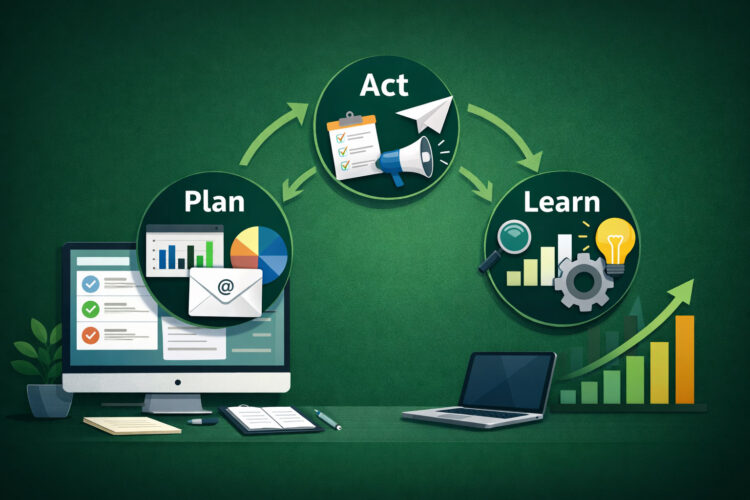
The “Plan, Act, Learn” cycle is the beating heart of Agile email marketing. It’s a continuous loop that fuels your progress and allows you to adapt to the dynamic demands of your audience and the market.
In the realm of digital marketing, understanding the nuances of customer engagement is crucial, and a related article that delves deeper into this topic is available for those interested in enhancing their strategies. The piece titled Advanced Email Marketing Strategies provides valuable insights on how to effectively segment your audience and personalize your campaigns, complementing the principles outlined in Agile Email Marketing: Plan, Act, Learn. By integrating these advanced techniques, marketers can optimize their email outreach and drive better results.
Plan: Charting Your Course with Purpose
The “Plan” phase is not about rigid, long-term blueprints but about defining clear, achievable objectives for your upcoming sprint. This involves understanding your overarching goals – be it increasing conversion rates, boosting customer retention, or driving brand awareness – and then breaking them down into smaller, actionable tasks.
Defining Sprint Goals: What Do You Aim to Achieve in this Phase?
When you embark on a new sprint, your initial step is to clearly define what you want to accomplish. Are you aiming to increase open rates by 5% for a specific segment? Do you want to reduce unsubscribe rates for your promotional emails? Or perhaps your goal is to test the effectiveness of a new personalization element in your newsletter? Setting these specific, measurable, achievable, relevant, and time-bound (SMART) goals for each sprint provides a tangible target and a yardstick against which to measure your success.
Task Breakdown: Deconstructing the Effort
Once your sprint goals are defined, you need to break them down into individual tasks. This is like dissecting a complex machine into its constituent parts, making it understandable and manageable. For instance, if your sprint goal is to improve your welcome email series, your tasks might include researching best practices for welcome emails, writing new subject lines, crafting revised body copy, designing updated graphics, setting up A/B tests for different versions, and scheduling the revised series.
Prioritization: Focusing Your Energy Where it Matters Most
With your tasks listed, you must prioritize them. Not all tasks are created equal, and some will contribute more directly to achieving your sprint goals than others. Consider the impact and effort required for each task. High-impact, low-effort tasks should generally be tackled first. This prioritization ensures that your team’s energy is focused on activities that will yield the most significant results within the sprint’s timeframe. It’s akin to a captain deciding which sails to unfurl first on a ship to gain the most momentum in a particular wind.
Resource Allocation and Timeboxing: Assigning Your Assets
The planning phase also involves allocating the necessary resources – your time, your team’s skills, and any tools or budget – to each task. Furthermore, “timeboxing” is a crucial agile technique. This means assigning a fixed maximum duration for each task or activity. For example, you might allocate two days for copywriting, one day for design review, and three days for setting up and monitoring A/B tests. This prevents tasks from stretching on indefinitely and forces efficiency.
Act: Executing Your Plan with Velocity
The “Act” phase is where your carefully crafted plans come to life. This is the period of focused execution, where you bring your ideas to fruition and deliver tangible results. It’s about moving with purpose and without hesitation, transforming your intentions into reality.
Campaign Execution: Bringing Your Emails to Life
This is where the rubber meets the road. You will execute the tasks defined in your planning phase. This includes writing compelling copy, designing visually appealing templates, segmenting your audience accurately, setting up tracking mechanisms, and scheduling your emails according to your plan. The emphasis here is on efficiency and accuracy, ensuring that what you’ve planned is implemented impeccably.
A/B Testing and Experimentation: Probing the Unknown
A core tenet of Agile is to constantly experiment and test. This phase involves running A/B tests on various elements of your emails – subject lines, calls-to-action, content formats, sending times, and personalization strategies. By testing different variations, you gather empirical data on what resonates best with your audience, moving beyond assumptions and intuition.
Learn: Extracting Insights for Future Growth
The “Learn” phase is perhaps the most crucial for long-term success. It’s where you analyze the results of your “Act” phase, extract meaningful insights, and feed that knowledge back into your next “Plan” phase. This is the feedback loop that prevents stagnation and drives continuous improvement.
Data Analysis and Performance Review: Deciphering the Numbers
After your emails have been sent and you’ve allowed sufficient time for opens and clicks, rigorously analyze the data. This involves looking at key metrics like open rates, click-through rates, conversion rates, unsubscribe rates, and revenue generated. Compare these metrics against your sprint goals and benchmarks. Identify what worked well and what didn’t, and try to understand the underlying reasons. For example, did a particular subject line drive significantly higher open rates? Was a specific call-to-action more effective at generating conversions?
Gathering Subscriber Feedback: Listening to Your Audience
Beyond quantitative data, actively solicit qualitative feedback from your subscribers. This can be done through surveys embedded in your emails, post-purchase follow-up emails, or by monitoring social media mentions. Understanding the “why” behind the numbers can be invaluable. Did customers find the offer confusing? Was the content irrelevant to their needs? This direct feedback is gold, offering a nuanced perspective that raw data might miss.
Identifying Key Learnings and Best Practices: Distilling Wisdom
Consolidate your findings from data analysis and subscriber feedback. What are the key takeaways from this sprint? What did you learn about your audience’s preferences, pain points, and motivations? Document these learnings and identify any emerging best practices that you can apply to future campaigns. This distillation process transforms raw data into actionable knowledge that fuels your evolutionary journey.
The Iterative Nature of Success: Embracing the Continuous Cycle
The power of Agile email marketing lies in its iterative nature. It’s not a one-off project but a continuous process of refinement. The insights you gain in the “Learn” phase directly inform your next “Plan” phase, creating a virtuous cycle of improvement.
Adapting to Audience Behavior: Staying Ahead of the Curve
Consumer behavior is not static; it’s a constantly flowing river. Your Agile approach allows you to flow with it. By regularly analyzing data and gathering feedback, you can quickly identify shifts in your audience’s preferences, purchasing patterns, or engagement levels. This enables you to adapt your email content, offers, and segmentation strategies in near real-time, ensuring that your communication remains relevant and impactful. Without this agility, your messages risk becoming like outdated maps, leading your subscribers in directions they no longer wish to go.
Navigating Market Changes: Remaining Resilient
The digital marketing landscape is also subject to frequent changes – new algorithms, emerging platforms, evolving consumer expectations, and competitive pressures. An Agile framework equips you with the resilience to navigate these shifts. Instead of being caught off guard by a sudden change, your iterative approach allows you to experiment with new tactics, test different approaches, and adapt your strategy quickly. This flexibility ensures that your email marketing remains effective, even as the external environment transforms.
Optimizing Throughout the Lifecycle: From Acquisition to Retention
Agile is not limited to a single stage of the customer journey. You can apply the Plan, Act, Learn cycle to all aspects of your email marketing, from acquiring new subscribers to retaining existing customers. For instance, you might dedicate a sprint to testing different lead magnet offers for list growth, another to optimizing your onboarding emails for new subscribers, and a subsequent one to developing re-engagement campaigns for inactive customers. This comprehensive application ensures that your entire email marketing ecosystem is continuously evolving and improving.
Implementing Agile in Your Email Marketing Workflow
Transitioning to an Agile methodology requires a conscious shift in mindset and workflow. It’s about embracing flexibility and a results-oriented approach.
Tools and Technologies: Enabling Your Agile Journey
While the principles of Agile are paramount, certain tools can significantly enhance your ability to operate in this manner. Your email service provider (ESP) is a foundational tool, offering capabilities for segmentation, A/B testing, automation, and analytics. Project management software, such as Trello, Asana, or Jira, can be invaluable for breaking down tasks, assigning responsibilities, and tracking progress within sprints. Content creation tools and design software will facilitate the execution of your campaigns. Crucially, a robust analytics platform is essential for gathering the data needed for your “Learn” phase.
Team Collaboration and Communication: Fostering a Unified Front
Effective collaboration and clear communication are the bedrock of any Agile initiative. Encourage open dialogue and regular check-ins among your team members. Daily stand-up meetings, even for short durations, can be highly beneficial for syncing up on progress, identifying any blockers, and discussing immediate next steps. This transparency ensures that everyone is on the same page and can quickly address challenges as they arise.
Measuring Success and Continuous Improvement: The Never-Ending Quest
Success in Agile email marketing is not a destination but a journey of continuous improvement. Regularly review your overall progress against your strategic objectives. What are the overarching trends you’re observing? Are your sprints collectively moving you closer to your long-term goals? Embrace a culture where learning from both successes and failures is encouraged. This commitment to ongoing refinement will ensure that your email marketing efforts remain a powerful and effective channel for your business.
FAQs
What is Agile Email Marketing?
Agile Email Marketing is a flexible and iterative approach to creating and managing email campaigns. It emphasizes rapid testing, learning from data, and continuously improving email content and strategy to better engage recipients and achieve marketing goals.
How does the Agile methodology apply to email marketing?
In email marketing, Agile methodology involves planning small, manageable campaigns or tests, acting by sending these emails to targeted segments, and learning from the results through data analysis. This cycle is repeated frequently to optimize performance and adapt quickly to audience preferences.
What are the key benefits of using Agile in email marketing?
The key benefits include faster response to market changes, improved email relevance through continuous testing, higher engagement rates, better personalization, and more efficient use of marketing resources by focusing on what works best.
What steps are involved in planning an Agile email marketing campaign?
Planning involves setting clear objectives, defining target audience segments, designing testable email variations, scheduling send times, and establishing metrics for success. The plan should allow for quick adjustments based on feedback and data collected from each campaign iteration.
How can marketers effectively learn from Agile email marketing campaigns?
Marketers analyze key performance indicators such as open rates, click-through rates, conversions, and unsubscribe rates. They use A/B testing results and customer feedback to identify what resonates with their audience, then apply these insights to refine future emails and overall strategy.