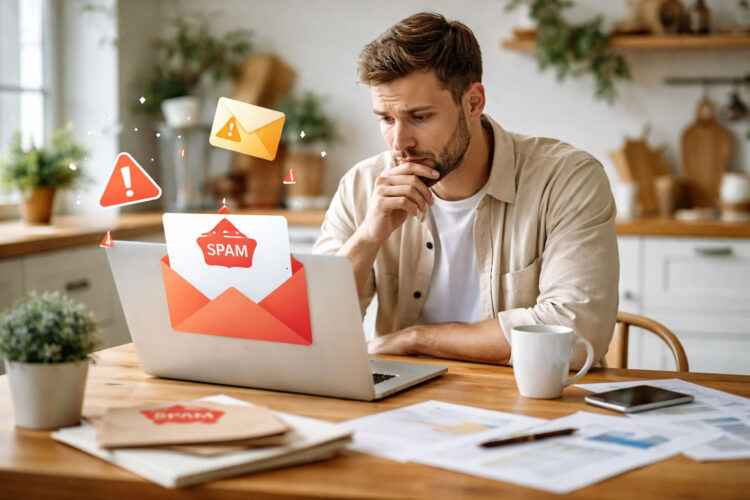
You’re meticulously crafting your email campaigns, pouring over your copy, designing stunning visuals, and segmenting your audience with surgical precision. Yet, your open and click-through rates are abysmal. You suspect the culprit: the dreaded spam folder. It’s a silent assassin, intercepting your carefully constructed messages before they ever reach their intended recipients. You’re not alone in this struggle. Many businesses face the same challenge, often unknowingly committing errors that trigger spam filters. Understanding these common mistakes and implementing effective solutions is paramount to ensuring your valuable emails land in the inbox, not the junk bin. This guide will walk you through the pitfalls and provide actionable strategies to navigate the complex world of email deliverability.
One of the most foundational and frequently overlooked aspects of email marketing is the health of your subscriber list. A dirty, outdated, or unethically acquired list is a direct path to the spam folder. Spam filters are sophisticated. They observe not just the content of your emails, but also how recipients interact with them. A high rate of bounces, unsubscribes, or, worse, spam complaints, signals to email service providers (ESPs) that your emails are unwelcome. This triggers a negative reputation for your sending domain, making it harder for future emails to reach anyone.
Outdated and Invalid Email Addresses
Over time, email addresses become inactive, get abandoned, or are simply mistyped during acquisition. Sending to these addresses results in “hard bounces,” which are definitive delivery failures. A consistently high hard bounce rate is a red flag. ESPs view this as an indicator of a poorly maintained list, suggesting you might not be respecting user preferences or that you’re simply sending indiscriminately.
Your solution here involves regular list cleaning. Implement a validation process for new sign-ups, using double opt-in to confirm the email address actually belongs to a real person and that they genuinely want to receive your emails. For existing lists, deploy a re-engagement campaign. Send a series of emails to inactive subscribers asking if they still wish to receive your communications. Those who don’t respond or explicitly decline should be removed from your active sending list. Consider using email verification services that can identify and remove invalid addresses before you even hit send. This proactive approach significantly reduces your bounce rate and improves your sender reputation.
Purchased or Scraped Email Lists
This is a cardinal sin in email marketing and a guaranteed way to land in the spam folder. Purchased or scraped lists are comprised of individuals who have not explicitly given you permission to email them. This violates most anti-spam laws, including GDPR and CAN-SPAM, and immediately triggers spam filters. These lists are notorious for containing spam traps – email addresses deliberately set up by ESPs to catch spammers. Sending to a spam trap will instantly plummet your sender reputation and could lead to your domain being blacklisted.
The solution is unequivocal: never buy or scrape email lists. Build your list organically through legitimate opt-in methods. Focus on attracting genuinely interested subscribers through valuable content, clear calls to action, and transparent privacy policies. While building a list organically takes time, the quality of engagement and deliverability you’ll achieve far outweighs the perceived shortcuts of purchased lists.
Lack of Opt-in Confirmation
A single opt-in process means a subscriber is added to your list immediately after submitting their email address. While seemingly efficient, it’s prone to human error (typos) and malicious sign-ups. Double opt-in requires subscribers to confirm their subscription by clicking a link in a confirmation email. This extra step ensures the email address is valid and that the person genuinely wishes to receive your communications.
Implementing double opt-in is a robust defense against spam complaints. It weeds out mistyped addresses and demonstrates a clear intent from the subscriber. This practice not only improves deliverability but also fosters a higher quality, more engaged audience, ultimately leading to better campaign performance.
In addition to understanding why email campaigns often end up in spam folders and how to rectify this issue, you may find it beneficial to explore the article on email deliverability best practices. This resource provides valuable insights into optimizing your email content and improving sender reputation, which can significantly enhance your campaign’s success. For more information, you can read the article here: Email Deliverability Best Practices.
Weak Sender Reputation: The Invisible Barrier
Your sender reputation is a critical, yet often unseen, factor in email deliverability. It’s essentially a score assigned to your sending domain and IP address by ESPs. A good reputation means your emails are more likely to reach the inbox, while a poor one flags you as a potential spammer, regardless of your content. This score is aggregated from various data points, including bounce rates, spam complaints, engagement metrics (opens, clicks), and even your sending volume and frequency.
High Spam Complaint Rates
When a recipient marks your email as spam, it’s a severe blow to your sender reputation. Even a small percentage of spam complaints can significantly impact your deliverability. ESPs interpret these complaints as a clear signal that your content is unsolicited or unwanted.
To mitigate spam complaints, review your content for relevancy and value. Are you sending too frequently? Is your messaging clear and concise? Is it what subscribers signed up for? Provide clear and easy-to-find unsubscribe links. While you might regret seeing subscribers leave, forcing them to remain on your list will likely lead to spam complaints instead of unsubscribes, which is far more damaging. Segment your audience effectively so that people receive content directly relevant to their interests. This increases engagement and reduces the likelihood of them feeling overwhelmed or disengaged.
Inconsistent Sending Volume and Frequency
Sudden, dramatic spikes in your sending volume after a period of dormancy can trigger spam filters. This pattern often mimics that of spammers who lie low and then unleash a large email blast. Similarly, sending too frequently can annoy subscribers and lead to unsubscribes or spam complaints. Conversely, sending too infrequently might make subscribers forget they ever opted in, also increasing the chances of them marking your emails as spam.
Maintain a consistent sending schedule. If you’re a new sender or are re-activating an old domain, gradually warm up your IP address by sending smaller volumes of emails to your most engaged subscribers first, then slowly increasing your volume over time. Find a balance in frequency that keeps your audience engaged without overwhelming them. Monitor your open and click-through rates as indicators of whether your frequency is optimal.
Lack of Authentication (SPF, DKIM, DMARC)
Email authentication protocols like SPF (Sender Policy Framework), DKIM (DomainKeys Identified Mail), and DMARC (Domain-based Message Authentication, Reporting, and Conformance) are essential for verifying that your emails are legitimately coming from your domain. Without these, your emails are more susceptible to spoofing and phishing attempts, and ESPs may view them as suspicious.
SPF authorizes specific IP addresses to send emails on behalf of your domain. DKIM adds a digital signature to your outgoing emails, verifying that the message hasn’t been tampered with in transit. DMARC builds upon SPF and DKIM, providing instructions to ESPs on how to handle emails that fail authentication. Configuring these records in your DNS settings is a critical step in building trust with ESPs and significantly improving your deliverability. Consult your email service provider’s documentation or a knowledgeable IT professional if you’re unsure how to set these up.
Content and Formatting Faux Pas: Triggering the Algorithms
Beyond sender reputation and list hygiene, the actual content and formatting of your emails can also be a major factor in determining whether they land in the inbox or the spam folder. Spam filters analyze various elements within your email, looking for patterns commonly associated with unsolicited bulk email.
Overuse of Spam Trigger Words and Phrases
Certain words and phrases have become synonymous with spam due to their frequent use in unsolicited commercial emails. Terms like “free,” “winner,” “guarantee,” “act now,” “limited time offer,” “cash,” “discount,” “urgent,” “once in a lifetime,” and excessive exclamation marks can all contribute to your email being flagged. While some of these words might be relevant to your legitimate offers, overuse or placement in prominent areas (like the subject line) can be detrimental.
Train yourself and your copywriters to be mindful of these trigger words. While you don’t need to completely eliminate them, use them sparingly and strategically. Focus on providing value and benefits rather than employing aggressive sales language. Sometimes, rephrasing your message can achieve the same impact without raising red flags. For instance, instead of “Claim your FREE trial now!”, consider “Experience our service with a complimentary trial.”
Poorly Constructed HTML and Excessive Images
While visually appealing emails are important for engagement, issues with HTML code or an overreliance on images can trigger spam filters. Spam filters often scrutinize the ratio of text to images. An email with a very high image-to-text ratio, or one composed almost entirely of a single large image, is a common tactic used by spammers attempting to hide malicious content from text-based filters. Similarly, broken or poorly coded HTML can be interpreted as suspicious.
Strive for a balanced text-to-image ratio. Ensure your emails are predominantly text-based, with images serving to enhance, not replace, your message. Always include alt text for your images, which helps with accessibility and provides context if images fail to load. Use clean, well-structured HTML. Test your emails across different email clients and devices to ensure proper rendering and catch any coding issues. Most reputable email service providers offer robust drag-and-drop editors that generate clean HTML by default, reducing this risk.
Misleading Subject Lines and Preheader Text
The subject line and preheader text are your first impressions. If they are misleading, deceptive, or create false urgency, recipients are likely to feel tricked. This leads to higher unsubscribe rates and, critically, more spam complaints. Spam filters are also designed to identify patterns in subject lines that are commonly associated with spam, such as CAPITAL LETTERS, excessive punctuation, and irrelevant emojis.
Craft clear, concise, and honest subject lines that accurately reflect the content of your email. Avoid clickbait tactics. Personalization, when done authentically, can increase open rates. Use your preheader text to further elaborate on your subject line and provide additional context without being redundant. A/B test various subject lines to see what resonates best with your audience. Remember, transparency builds trust, and trust leads to better deliverability and engagement.
Lack of Engagement: A Silent Killer of Deliverability

Email service providers increasingly use engagement metrics as a significant factor in determining deliverability. If your emails are consistently unread, unopened, or unclicked, it signals to ESPs that your subscribers have little interest in your content. This low engagement negatively impacts your sender reputation, pushing your emails towards the spam folder.
Low Open and Click-Through Rates
When recipients consistently ignore your emails, ESPs take notice. A low open rate suggests your subject lines aren’t compelling or your audience isn’t interested. A low click-through rate, even with good opens, indicates your content isn’t resonating or your calls to action are unclear. These metrics are a direct reflection of how valuable your subscribers perceive your communications to be.
To boost these rates, focus on delivering highly relevant and valuable content. Segment your audience intelligently so that each subscriber receives messages tailored to their specific interests and stage in the customer journey. Personalization – beyond just using their first name – can significantly improve engagement. Craft compelling subject lines and preheader text that pique curiosity and accurately reflect the email’s content. Design clear and prominent calls to action (CTAs). Routinely analyze your campaign performance. If certain segments or content types consistently underperform, adjust your strategy.
High Unsubscribe Rates and Spam Complaints
While an unsubscribe is generally preferable to a spam complaint, consistently high unsubscribe rates still indicate a problem with your email strategy. It suggests your content isn’t meeting expectations, you’re sending too frequently, or you’re targeting the wrong audience. As discussed earlier, spam complaints are particularly damaging.
Actively seek feedback from your subscribers. Consider including a preference center where subscribers can tailor the types and frequency of emails they receive. This empowers them and reduces the likelihood of them unsubscribing due to irrelevance or overwhelm. Regularly review your unsubscribe reasons if your ESP provides them, and use this data to refine your content and sending strategy. Ensure your unsubscribe process is straightforward and one-click, as making it difficult can frustrate users and lead them to mark your email as spam out of annoyance.
Failure to Use a Preference Center or Segment Audiences
Sending generic, one-size-fits-all emails to your entire list is a recipe for low engagement. Not all subscribers are interested in all your products, services, or content. This lack of relevance leads to disinterest, unopens, and ultimately, disengagement.
Implement a preference center that allows subscribers to choose which types of emails they want to receive and how frequently. This empowers them and ensures your communications are always hitting the mark. Segment your audience based on demographics, purchase history, engagement levels, interests, and behavior. Tailoring content to specific segments dramatically increases relevance, leading to higher open rates, click-through rates, and overall engagement, while simultaneously reducing unsubscribes and spam complaints. The more hyper-targeted your messages, the more likely they are to be welcomed into the inbox.
If you’re struggling with email campaigns landing in the spam folder, you might find it helpful to read a related article that delves deeper into the intricacies of email deliverability. This resource offers valuable insights and practical tips to enhance your email marketing strategy. For more information, check out this informative piece on email deliverability which can help you understand the factors that influence your campaign’s success.
Technical Oversights: Unseen Hurdles to Deliverability
| Reasons for Email Campaigns Going to Spam | How to Fix It |
|---|---|
| Unsolicited Emails | Ensure recipients have opted in to receive emails and provide an easy way to unsubscribe. |
| Poor Email Content | Create engaging and relevant content, avoid using spam trigger words, and maintain a good text-to-image ratio. |
| Low Sender Reputation | Authenticate your domain, use a consistent sending IP, and maintain a clean email list. |
| Incorrect Email Configuration | Check email authentication settings, use a reputable email service provider, and monitor email deliverability. |
| High Spam Complaint Rate | Monitor and address spam complaints, provide valuable content, and honor unsubscribe requests promptly. |
Beyond content and sender reputation, several technical elements can inadvertently funnel your emails into the spam folder. These are often configuration issues or a lack of attention to the finer details of sending email.
Sending from a Free Email Address (e.g., Gmail, Yahoo)
Attempting to send marketing emails from a generic free email address (like @gmail.com or @yahoo.com) is unprofessional and severely hinders deliverability. ESPs are highly suspicious of emails originating from these domains when they claim to be a business, as they lack the authentication required for legitimate business communication. It makes it easy for spammers to impersonate legitimate senders.
Always send emails from a custom domain that matches your business website (e.g., [email protected]). This provides a layer of authentication and professionalism that free email addresses cannot. It also allows you to implement critical authentication protocols like SPF, DKIM, and DMARC, which are impossible with generic domains. Using your own domain is a fundamental step in establishing your legitimate sender identity.
Lack of a Physical Address and Unsubscribe Link
Legal compliance, especially with regulations like CAN-SPAM and GDPR, mandates the inclusion of certain elements in commercial emails. This includes a clear and conspicuous unsubscribe link and your physical mailing address. Failing to include these elements can not only lead to legal penalties but also trigger spam filters, which look for these compliance markers.
Ensure every marketing email you send includes a readily visible unsubscribe link, preferably at the top or bottom of the email. Test the link to confirm it works correctly. Additionally, include your company’s physical mailing address in the footer of your emails. This demonstrates transparency and compliance, signaling to ESPs that you are a legitimate business adhering to email marketing best practices.
Blocking of Images by Default
Many email clients block images by default for security and privacy reasons. If your email is heavily reliant on images to convey its message, subscribers who have images blocked will see a disjointed or uninformative email, leading to a poor user experience. This can result in disengagement, unsubscribes, or even spam complaints if they feel they aren’t receiving the full message.
Design your emails to be effective even without images. Ensure your core message is conveyed through text. Use alt text for all images so subscribers can understand what the image represents even if it doesn’t load. Provide a “view in browser” link at the top of your emails so subscribers can easily access a fully rendered version if they encounter display issues. This ensures your message is delivered consistently and effectively, regardless of the recipient’s email client settings.
Navigating the intricacies of email deliverability requires ongoing vigilance and a commitment to best practices. By addressing these common mistakes and implementing the suggested solutions, you can significantly improve your chances of landing in the inbox, fostering stronger connections with your audience, and ultimately driving better results for your email campaigns. Remember, the goal is not just to send an email, but to ensure it is received, opened, and appreciated.
FAQs
1. Why do email campaigns often go to spam folders?
Email campaigns often go to spam folders due to various reasons such as using spam trigger words in the subject line or content, sending emails to inactive or purchased email lists, not having proper authentication (SPF, DKIM, DMARC), and having a poor sender reputation.
2. How can I improve the deliverability of my email campaigns?
To improve the deliverability of your email campaigns, you can start by using a reputable email service provider, ensuring that your email list is opt-in and regularly cleaned, avoiding spam trigger words, and implementing proper authentication protocols such as SPF, DKIM, and DMARC.
3. What are some common spam trigger words to avoid in email campaigns?
Common spam trigger words to avoid in email campaigns include “free,” “buy now,” “limited time,” “act now,” “amazing,” “cash,” “earn,” “guarantee,” “offer,” “prize,” “save,” and “winner.”
4. How can I check my sender reputation and improve it?
You can check your sender reputation using tools like Sender Score or BarracudaCentral. To improve your sender reputation, focus on sending relevant and engaging content, maintaining a low complaint rate, regularly cleaning your email list, and following best email marketing practices.
5. What are some best practices for avoiding spam filters in email campaigns?
Some best practices for avoiding spam filters in email campaigns include personalizing your emails, providing clear opt-out options, using a consistent “from” name and email address, avoiding excessive use of images, and regularly monitoring and maintaining your email list.