
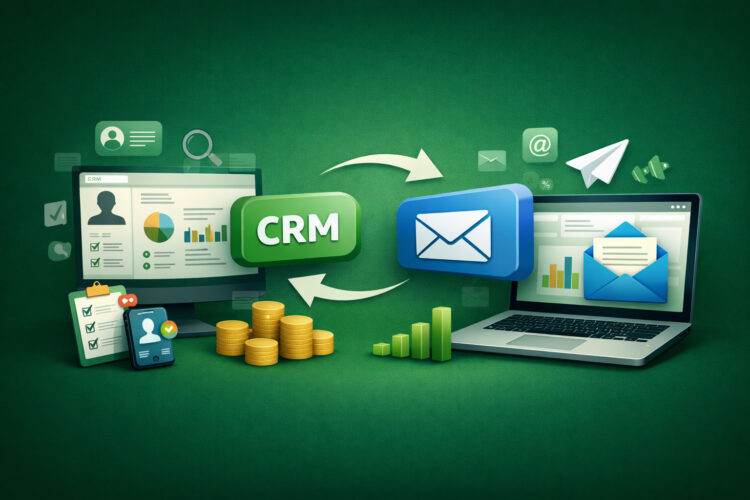
You are a navigator charting the waters of customer relationships, and your compass is a robust Customer Relationship Management (CRM) system. The winds of effective communication, however, are best harnessed through the sails of email marketing. When these two powerful forces are integrated, you unlock a superior vessel for cultivating loyalty, driving conversions, and ultimately, steering your business towards sustained growth. This article will examine how you can maximize your customer engagement by strategically integrating your CRM and email marketing efforts.
You manage a treasure trove of customer data within your CRM. This system acts as the central nervous system for your customer interactions, housing every touchpoint, purchase history, demographic detail, and preference. It’s the repository of knowledge, the silent observer that understands who your customers are. Email marketing, conversely, is your direct line of communication, the articulate voice that speaks to them. Without an integrated approach, your CRM is a silent library, and your email marketing is a series of disconnected whispers.
Understanding Your Audience with CRM Data
Your CRM provides you with a detailed portrait of each customer. It’s not just a list of names and addresses; it’s a dynamic snapshot of their journey with you.
Segmentation: The Art of Precise Targeting
Within your CRM, you can carve your customer base into specific segments. Think of it like crafting bespoke tools for different tasks.
Demographic segmentation:
This involves dividing your audience based on observable characteristics such as age, gender, location, income, and education level. For example, understanding the age demographic of your customers allows you to tailor product recommendations or promotional messages that resonate with their life stage.
Psychographic segmentation:
This delves deeper into your customers’ lifestyles, values, attitudes, and interests. Imagine understanding that a segment of your audience values sustainability; you can then craft email campaigns highlighting your eco-friendly initiatives or products.
Behavioral segmentation:
This is arguably the most powerful form of segmentation, based on actual customer actions. This includes purchase history, website browsing behavior, engagement with past emails, and product usage. For instance, customers who have recently purchased a specific product can be targeted with follow-up emails offering complementary items or usage tips.
Geographic segmentation:
This allows you to tailor campaigns based on location, which can be crucial for promotions, events, or product availability. A regional sale, for example, would be most effectively communicated to customers within that specific geographic area.
The Power of Personalized Messaging
Once you have segmented your audience, your CRM data becomes the fuel for hyper-personalized email marketing.
Tailoring Content to Individual Needs
Generic email blasts are like shouting generic platitudes into a crowded room. Personalized emails, however, are like having a one-on-one conversation.
Product Recommendations:
Leveraging purchase history and browsing data from your CRM, you can suggest products that a customer is highly likely to be interested in. If a customer repeatedly browses a particular category of clothing, you can send them an email showcasing new arrivals in that category.
Lifecycle Marketing:
Your CRM tracks where a customer is in their journey. You can automatically trigger emails for onboarding new customers, re-engaging dormant accounts, or celebrating customer anniversaries.
Event-Triggered Emails:
These are emails sent automatically in response to specific customer actions. Examples include a welcome email immediately after signup, an abandoned cart reminder, or a post-purchase thank you with related product suggestions.
Integrating CRM with email marketing platforms can significantly enhance customer engagement and streamline marketing efforts. For a deeper understanding of this integration and its benefits, you can refer to the article titled “Maximizing Your Marketing Strategy: The Power of CRM and Email Marketing Integration” available at this link. This article provides valuable insights on how combining these tools can lead to more personalized communication and improved customer relationships.
Crafting Effective Email Campaigns: Data-Driven Decisions
Your CRM doesn’t just house data; it provides the insights that empower you to make intelligent decisions about your email marketing strategy.
Leveraging CRM for Content Strategy
The information within your CRM dictates what kind of content will be most impactful.
Identifying Content Gaps and Opportunities
By analyzing customer behavior and inquiries logged in your CRM, you can identify areas where customers might need more information or where there’s an unmet need.
Frequently Asked Questions (FAQs):
If your CRM shows a recurring customer question, this indicates an opportunity for an email campaign that addresses this FAQ, potentially reducing support inquiries and educating your audience.
Product Feature Deep-Dives:
For products that are popular but perhaps under-utilized, your CRM data can signal that customers might benefit from emails that highlight specific features and their advantages.
Educational Content:
Based on customer purchase patterns or stated interests in your CRM, you can develop email sequences that educate them about best practices, industry trends, or advanced uses of your products or services.
Optimizing Email Performance with CRM Metrics
Your CRM can track the success of your email campaigns, allowing for continuous improvement.
A/B Testing and Iteration
A/B testing is your laboratory for experimentation, and your CRM provides the dataset to interpret your findings.
Subject Line Optimization:
By testing different subject lines, you can determine which ones generate higher open rates, leading to more eyes on your message. Your CRM can track which subject lines correlate with higher engagement for specific customer segments.
Call-to-Action (CTA) Effectiveness:
Experiment with different CTA button text, colors, and placements to see which ones drive more clicks and conversions. Your CRM can track which CTAs lead to desired outcomes for various customer segments.
Content Format and Tone:
Test different email layouts, image usage, and writing styles to see what resonates best with your audience. Your CRM can cross-reference engagement metrics with the content variations to show you what works.
Automating Your Outreach: The Efficiency Engine

The integration of CRM and email marketing allows you to automate much of your communication, freeing up valuable human capital for more strategic tasks.
Streamlining Workflows with Automation Rules
Your CRM allows you to set up automated workflows that trigger emails based on predefined conditions. This is akin to setting up a sophisticated irrigation system for your customer garden, ensuring consistent nourishment.
Triggered Email Sequences
These are pre-written series of emails that are sent automatically based on customer actions or inactivity.
Welcome Series:
Upon a new customer signing up, a welcome series can be triggered, introducing them to your brand, highlighting key benefits, and guiding them towards their first purchase or engagement.
Lead Nurturing:
For potential customers who have shown interest but haven’t converted, a lead nurturing sequence can be implemented, providing them with valuable content, testimonials, and gentle nudges towards a purchase decision.
Post-Purchase Follow-up:
After a purchase, an automated series can provide order confirmations, shipping updates, thank you messages, and suggestions for complementary products.
Re-engagement Campaigns
When a customer becomes inactive, automation rules can trigger a re-engagement campaign designed to win them back.
Win-Back Offers:
Sending a special discount or exclusive offer to a customer who hasn’t engaged in a while can be highly effective in bringing them back into the fold.
Feedback Requests:
For customers who have disengaged, an apology and a request for feedback can sometimes provide valuable insights and demonstrate that you value their opinion, potentially leading to their return.
Maintaining Data Integrity and Hygiene
Automation also plays a crucial role in keeping your CRM data clean and up-to-date, which is essential for effective segmentation and personalization.
Automated Data Updates
Your CRM can be configured to automatically update customer records based on their interactions with your email campaigns.
Engagement Tracking:
When a customer opens an email, clicks a link, or unsubscribes, this information can be automatically logged in their CRM profile, providing a real-time view of their engagement level.
Preference Management:
When customers update their preferences through an email preference center, this information can be synced back to their CRM record, ensuring accurate targeting.
Measuring Success: The Dashboard of Insights
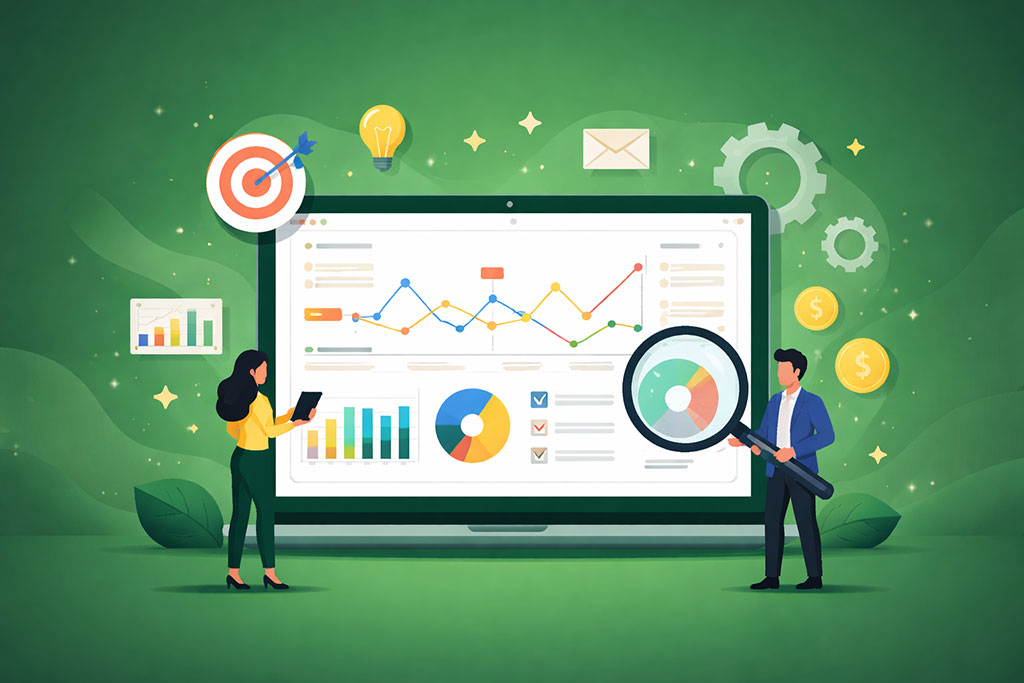
Without proper integration, you’re essentially flying blind. Your CRM and email marketing integration provides you with a dashboard of actionable insights, allowing you to see the metrics that truly matter.
Key Performance Indicators (KPIs) for Email Marketing
Your CRM allows you to track a range of KPIs to assess the effectiveness of your email campaigns.
Open Rates and Click-Through Rates (CTRs)
These are fundamental metrics that indicate how compelling your subject lines and email content are.
Subject Line Impact:
High open rates suggest that your subject lines are effectively capturing attention. Your CRM can help you correlate specific subject line strategies with higher open rates across different segments.
Content Engagement:
A high CTR indicates that your email content is prompting action. By analyzing which links are clicked most frequently, you can understand what aspects of your messaging are resonating.
Conversion Rates and ROI
Ultimately, your email marketing should drive business outcomes.
Direct Revenue Attribution:
By linking email campaigns to sales within your CRM, you can directly measure the revenue generated by your email efforts. This allows you to calculate the return on investment (ROI) for your email marketing spend.
Lead-to-Customer Conversion:
For businesses focused on lead generation, measuring the percentage of email-generated leads that convert into paying customers is a critical KPI.
Analyzing Customer Lifetime Value (CLV)
The true power of integrated CRM and email marketing lies in its ability to impact long-term customer value.
Understanding the Impact of Engagement on CLV
Your CRM allows you to track the lifetime value of customers acquired and nurtured through email marketing.
Loyal Customer Identification:
By analyzing CRM data, you can identify customers who are highly engaged through email and have a higher CLV, allowing you to refine your strategies to attract and retain similar customers.
Retention Efforts:
Effective email marketing, powered by CRM data, can significantly improve customer retention rates, as ongoing communication and personalized offers keep customers engaged and satisfied, thus increasing their CLV.
Integrating CRM with email marketing platforms can significantly enhance customer engagement and streamline communication strategies. For those looking to explore this topic further, a related article discusses the benefits and best practices of such integrations, providing valuable insights for businesses aiming to improve their marketing efforts. You can read more about it in this informative piece on integrating CRM with email marketing. This resource offers practical tips that can help you leverage the full potential of your CRM system alongside your email campaigns.
Future-Proofing Your Customer Relationships: Continuous Improvement
| Metric | Description | Typical Value / Range | Impact on Marketing |
|---|---|---|---|
| Open Rate | Percentage of recipients who open the email | 15% – 30% | Higher open rates indicate better subject line targeting and list quality |
| Click-Through Rate (CTR) | Percentage of recipients who click on links within the email | 2% – 10% | Measures engagement and effectiveness of email content |
| Conversion Rate | Percentage of email recipients who complete a desired action (purchase, signup) | 1% – 5% | Shows how well email campaigns drive business goals |
| List Growth Rate | Rate at which the email subscriber list is growing | 1% – 5% monthly | Indicates effectiveness of lead capture and CRM integration |
| Bounce Rate | Percentage of emails that could not be delivered | Less than 2% | Lower bounce rates improve sender reputation and deliverability |
| Unsubscribe Rate | Percentage of recipients who opt out from the email list | 0.1% – 0.5% | Helps assess content relevance and frequency |
| Lead Response Time | Average time taken to follow up on leads generated via email | Within 1 hour preferred | Faster response improves conversion and customer satisfaction |
| Data Sync Frequency | How often CRM and email platform data are synchronized | Real-time or hourly | Ensures up-to-date segmentation and personalization |
| Segmentation Accuracy | Percentage of contacts correctly segmented based on CRM data | Above 90% | Improves targeting and campaign effectiveness |
| ROI from Email Campaigns | Return on investment generated from email marketing efforts | 3x – 5x | Measures financial effectiveness of CRM-email integration |
The landscape of customer engagement is constantly evolving. Your integrated CRM and email marketing system is not a static tool; it’s a dynamic platform for continuous learning and adaptation.
Adapting to Evolving Customer Expectations
Customer expectations are a moving target. What impresses today might be commonplace tomorrow.
Embracing New Communication Channels
While email remains a powerful tool, your CRM should also integrate with other communication channels.
SMS Marketing:
For time-sensitive alerts or urgent promotions, integrating SMS marketing can offer a more immediate engagement.
Integrated Social Media Marketing:
Leveraging CRM data to inform your social media advertising and engagement strategies can create a more cohesive brand experience.
In-App Messaging:
For businesses with mobile applications, in-app messaging allows for contextual communication directly within the user experience.
Leveraging Advanced Analytics and AI
The future of customer engagement will be increasingly driven by data science and artificial intelligence.
Predictive Analytics for Customer Behavior
Your CRM, coupled with advanced analytics, can help you predict future customer behavior.
Churn Prediction:
By analyzing patterns of disengagement in your CRM data, you can predict which customers are at risk of churning and proactively implement retention strategies.
Next Best Action Recommendations:
AI algorithms can analyze customer data to suggest the most effective next action to take for each individual customer, be it a specific email offer, a personalized recommendation, or a proactive outreach.
Personalization at Scale
AI can enable hyper-personalization for vast customer bases, making each communication feel uniquely crafted.
Dynamic Content Generation:
AI can dynamically generate email content tailored to individual preferences, making every email a unique experience.
Intelligent Segmentation Refinement:
AI can continuously analyze your customer data to identify new and emerging segments, allowing you to refine your targeting and messaging with greater precision.
In conclusion, your CRM and email marketing integration is not merely a technical convenience; it’s a strategic imperative. By treating your CRM as the brain and email marketing as the voice, you build a powerful engine for understanding your customers, speaking to them effectively, and nurturing relationships that drive sustainable business success. The data within your CRM is not just information; it’s the blueprint for customer loyalty. When you combine this blueprint with the targeted delivery of email marketing, you don’t just engage customers; you build lasting partnerships.
FAQs
What is the benefit of integrating CRM with email marketing platforms?
Integrating CRM with email marketing platforms allows businesses to streamline customer data management, personalize email campaigns, improve targeting, and track customer interactions more effectively, leading to higher engagement and better ROI.
How does CRM integration improve email marketing campaigns?
CRM integration provides access to detailed customer information and behavior data, enabling marketers to segment audiences accurately, tailor content to individual preferences, automate follow-ups, and measure campaign performance in real-time.
What types of data are typically synchronized between CRM and email marketing platforms?
Commonly synchronized data includes contact details, purchase history, engagement metrics, lead status, customer preferences, and interaction history, which help create more personalized and relevant email communications.
Are there any technical requirements for integrating CRM with email marketing platforms?
Yes, integration usually requires compatible software or APIs, proper data mapping, secure authentication methods, and sometimes middleware or third-party connectors to ensure seamless data flow between systems.
Can small businesses benefit from integrating CRM with email marketing platforms?
Absolutely. Small businesses can leverage CRM and email marketing integration to automate marketing efforts, nurture leads efficiently, maintain organized customer data, and compete more effectively with larger companies.