
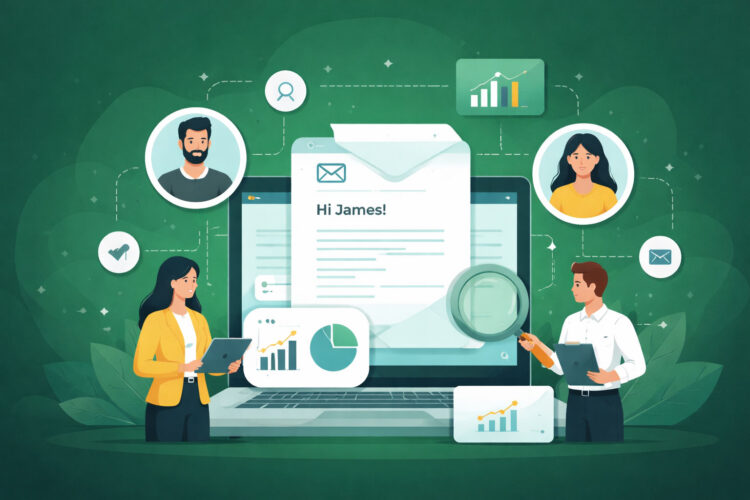
As a purveyor of effective digital communication, you understand the paramount importance of email marketing. Yet, in an increasingly saturated inbox, merely sending emails is insufficient. Your goal is not just delivery, but engagement – a substantive interaction that fosters connection and drives desired actions. This requires a strategic shift from generic broadcasts to personalized experiences, a transformation grounded in data. This article explores how you can leverage data to implement robust email personalization techniques, thereby boosting engagement and optimizing your email marketing initiatives.
The digital realm is a vast, interconnected ecosystem where attention is a finite resource. Static, undifferentiated emails are akin to shouting into a void; they lack resonance and are easily dismissed. Conversely, personalized emails act as carefully crafted messages, designed to speak directly to the individual recipient.
The Decline of Generic Communication
In an era of advanced analytics and sophisticated segmentation tools, the continued reliance on mass-market email communication is an anachronism. Recipients have grown accustomed to, and often expect, tailored content. Generic emails are frequently perceived as irrelevant, leading to:
- Low Open Rates: Without a compelling, personally relevant subject line, your email is unlikely to be opened.
- High Unsubscribe Rates: Irrelevant content can quickly frustrate recipients, prompting them to opt out of your mailing list.
- Diminished Brand Perception: A consistent stream of generic emails can communicate a lack of understanding or indifference toward your audience.
The Rise of the Individualized Journey
Modern email marketing transcends simple send-and-forget mechanisms. It focuses on nurturing an individualized journey, where each email serves as a touchpoint within a broader conversational arc. This approach fundamentally shifts your perspective from broadcasting to conversing. Personalized emails foster a sense of being understood and valued, which are critical elements in building lasting customer relationships.
For those interested in enhancing their email marketing strategies, understanding the differences between dedicated and shared IP addresses can be crucial. A related article that delves into this topic is titled “Dedicated IP vs Shared IP: Which One is Right for You?” This resource provides valuable insights that can complement your knowledge of email personalization techniques backed by data. You can read the article here: Dedicated IP vs Shared IP: Which One is Right for You?.
Data Acquisition and Segmentation: The Foundation of Personalization
The bedrock of any effective personalization strategy is robust data. Without accurate, comprehensive information about your subscribers, your efforts will be superficial at best. Consider data as the rich soil in which your personalization efforts will grow.
First-Party Data: Your Richest Resource
First-party data, collected directly from your subscribers and customers, is the most valuable asset you possess. This information is proprietary, accurate, and reflects actual interactions with your brand.
- Behavioral Data: This encompasses every action a subscriber takes on your website or within your applications. Examples include pages viewed, products added to cart, search queries, downloads, and content consumption. This data provides direct insights into their interests and intent.
- Demographic Data: While some demographic information can be inferred, direct collection through surveys or registration forms is more reliable. This includes age, gender, location, income level, and occupation. While less indicative of immediate intent than behavioral data, it can be useful for broader segmentation and content targeting.
- Transactional Data: Every purchase, return, or order cancellation provides valuable transactional data. This reveals purchasing habits, preferred product categories, average order value, and propensity for repeat purchases. This is foundational for purchase-based personalization.
- Subscription Preferences: Directly asking subscribers about their content preferences, frequency of communication, and areas of interest is a simple yet powerful way to gather first-party data.
Third-Party Data: Expanding Your View
While first-party data is paramount, third-party data – information acquired from external sources – can sometimes supplement your understanding. However, always exercise caution regarding data privacy and regulatory compliance (e.g., GDPR, CCPA).
- Data Appending: This involves enriching your existing subscriber profiles with additional data points from external providers. For example, enhancing a user’s profile with information about their industry or company size based on their email domain.
- Look-alike Audiences: Through various advertising platforms, you can create look-alike audiences based on the characteristics of your existing high-value customers. While primarily used for acquisition, insights from these audiences can inform segmentation for existing subscribers.
Effective Segmentation Strategies
Once you have acquired a diverse set of data, the next critical step is to segment your audience. Segmentation involves dividing your larger subscriber base into smaller, more homogeneous groups based on shared characteristics. Visualize your audience as a complex mosaic; segmentation helps you identify the individual tiles.
- Demographic Segmentation: Grouping subscribers by age, gender, location, or other basic attributes. This is a foundational, though often insufficient, segmenting method.
- Behavioral Segmentation: This is highly effective. Grouping subscribers by their actions and interactions. Examples include “frequent purchasers,” “cart abandoners,” “blog readers,” or “inactive users.”
- Psychographic Segmentation: Categorizing subscribers based on their attitudes, values, interests, and lifestyles. This often requires more advanced data collection methods like surveys or inferential analysis.
- Lifecycle Stage Segmentation: Grouping subscribers by where they are in their customer journey. Examples include “new subscribers,” “first-time buyers,” “loyal customers,” or “at-risk customers.” This allows for tailored communication relevant to their current stage.
Personalization Techniques: Crafting Relevant Experiences

With your data acquired and your audience segmented, you are now equipped to implement a range of personalization techniques. These techniques move beyond simply inserting a first name, aiming for deeper relevance.
Dynamic Content Insertion
This technique allows you to automatically populate different sections of your email with content that is unique to each recipient, based on their individual data and segment. It’s like having a bespoke tailoring service for each email.
- Product Recommendations: Based on past purchases, browsing history, or the behavior of similar customers, dynamically insert product recommendations. For example, an email might suggest “complementary items” after a recent purchase or “trending products” based on a user’s viewed categories.
- Geographic-Specific Content: Display content relevant to a subscriber’s location, such as local store promotions, event announcements, or weather-dependent product suggestions.
- Personalized Offers and Discounts: Provide offers tailored to a subscriber’s purchasing history or perceived value. A frequent buyer might receive an exclusive loyalty discount, while an inactive user might receive a re-engagement coupon.
- Content Based on Interests: If you have collected preference data regarding content types (e.g., blog posts, tutorials, product updates), dynamically insert articles or information aligning with those interests.
Automation and Triggered Emails
Automated, triggered emails are perhaps the most powerful application of personalization. These emails are automatically sent in response to a specific action or event undertaken by a subscriber. They are the responsive elements of your email marketing, reacting in real-time to your audience’s actions.
- Welcome Series: A sequence of emails sent to new subscribers, introducing them to your brand, highlighting key features, and encouraging initial engagement. Personalize these based on how they subscribed (e.g., through a specific landing page for a product).
- Cart Abandonment Reminders: When a user adds items to their shopping cart but does not complete the purchase, automatically send a reminder email. Include the abandoned items and potentially offer an incentive. This taps directly into their intent.
- Browse Abandonment Emails: Similar to cart abandonment, these emails are triggered when a user views specific products or categories multiple times but doesn’t add them to a cart. Remind them of the items they viewed and offer alternative suggestions.
- Post-Purchase Follow-Ups: After a purchase, send emails containing order confirmations, shipping updates, product care instructions, or requests for reviews. Personalize these with specific product information.
- Win-Back Campaigns: For inactive subscribers or lapsed customers, trigger a series of emails designed to re-engage them. Offer special incentives, showcase new products, or highlight recent improvements.
- Milestone Emails: Celebrate customer milestones such as anniversary dates of subscription, birthday wishes, or loyalty program tier achievements. These are excellent for building rapport.
Personalization in Subject Lines and Preheaders
The subject line and preheader are your email’s storefront window. They are the first impression and often the decisive factor in whether your email is opened. Personalization here is crucial for cutting through the noise.
- First Name Inclusion: While basic, using a recipient’s first name in the subject line can modestly increase open rates. Use this judiciously; over-reliance can diminish its impact.
- Urgency and Scarcity (Personalized): Combine time-sensitive offers with personalized elements. “John, your exclusive 20% off ends tonight!”
- Location-Specific References: “New Arrivals in Your City!” or “Events Near [City Name].”
- Referencing Past Behavior: “Your Basket Awaits, Emily!” or “Based on Your Interest in Gadgets…”
- Personalized Recommendations: “A New Book Just For You, Sarah.”
Advanced Strategies and Best Practices: Refining Your Approach

As your data analytics mature and your understanding of your audience deepens, you can employ more sophisticated personalization tactics. Think of this as progressing from basic arithmetic to advanced calculus in your personalization journey.
Predictive Personalization
This involves using machine learning algorithms to anticipate future customer behavior based on historical data. It moves beyond reacting to past actions and attempts to foresee future needs and preferences.
- Next Best Offer: Predicting which product or service a customer is most likely to purchase next and presenting that offer.
- Churn Prediction: Identifying customers at risk of cancellation or inactivity and proactively sending targeted retention campaigns.
- Optimal Send Time: Algorithms can analyze individual open patterns to send emails at the exact time a user is most likely to engage.
Real-Time Personalization
Leveraging data in real-time to modify email content or timing. This requires highly integrated systems and sophisticated marketing automation platforms.
- Real-time Stock Updates: If a product a customer previously viewed goes out of stock, immediately send an alert when it’s back in stock.
- Weather-Based Content: For relevant businesses (e.g., apparel, travel), dynamically alter content based on the recipient’s local weather forecast.
- Live Event Updates: For subscribers attending an event, provide real-time updates or schedule changes via email.
A/B Testing and Continuous Optimization
Personalization is not a one-time setup; it is an ongoing process of experimentation and refinement. A/B testing is your laboratory for understanding what resonates with your audience.
- Test Subject Lines: Experiment with different personalization elements, emojis, and urgency cues.
- Test Content Variants: Try different product recommendations, call-to-action buttons, or imagery within your personalized emails.
- Test Send Times: Determine if sending at specific times yields higher engagement for particular segments.
- Analyze Metrics Beyond Opens: While open rates are important, focus on click-through rates, conversion rates, and revenue generated from personalized campaigns. These are the true indicators of success.
Ensuring Data Privacy and Compliance
While pursuing personalization, you must remain vigilant regarding data privacy. Compliance with regulations such as GDPR, CCPA, and upcoming privacy legislation is non-negotiable.
- Transparency: Clearly communicate to your subscribers what data you are collecting and how you are using it.
- Consent: Obtain explicit consent for data collection and marketing communications.
- Security: Implement robust security measures to protect subscriber data.
- Opt-Out Mechanisms: Provide clear and easy ways for subscribers to manage their preferences or opt-out entirely. A personalized experience should never feel intrusive or manipulative.
In the realm of email marketing, understanding how to enhance user engagement is crucial, and one effective strategy is through personalization techniques backed by data. For those looking to further optimize their email campaigns, exploring how to maximize email image loading speed can significantly improve user experience and retention. This can be particularly beneficial when combined with personalized content, as it ensures that your emails not only resonate with your audience but also load efficiently. To learn more about this important aspect of email marketing, check out the article on maximizing email image loading speed.
The Payoff: Beyond Engagement to Brand Loyalty
| Email Personalization Technique | Metric | Data Insight | Impact on Campaign Performance |
|---|---|---|---|
| Using Recipient’s Name in Subject Line | Open Rate Increase | Emails with personalized subject lines see a 26% higher open rate | Boosts initial engagement by making emails feel more relevant |
| Behavioral Trigger Emails | Click-Through Rate (CTR) | Triggered emails have a 70.5% higher CTR than generic emails | Drives higher interaction by targeting user actions |
| Personalized Product Recommendations | Conversion Rate | Personalized recommendations increase conversion rates by 5.5x | Enhances sales by showing relevant products |
| Dynamic Content Based on Location | Engagement Rate | Location-based content increases engagement by 20% | Improves relevance and timeliness of offers |
| Send Time Optimization | Open Rate | Optimizing send time can increase open rates by up to 23% | Maximizes visibility by sending emails when recipients are most active |
| Personalized Subject Line Length | Open Rate | Subject lines with 6-10 words have 21% higher open rates | Balances clarity and personalization for better engagement |
The implementation of data-driven email personalization is more than a tactical adjustment; it is a strategic imperative that yields substantial returns. By speaking directly to your audience, acknowledging their individuality, and anticipating their needs, you cultivate a deeper relationship.
When your subscribers consistently receive relevant, valuable, and timely emails, several positive outcomes emerge:
- Increased Open and Click-Through Rates: Emails are opened because they promise relevant content, and they are clicked because that promise is fulfilled.
- Higher Conversion Rates: Personalization guides subscribers toward desired actions, whether purchases, registrations, or content downloads.
- Lower Unsubscribe Rates: Relevant communication reduces frustration and strengthens the desire to remain subscribed.
- Enhanced Customer Lifetime Value (CLTV): By fostering loyalty and repeat business, personalization contributes directly to the long-term profitability of your customer base.
- Stronger Brand Affinity: When your brand consistently demonstrates an understanding of its audience, it builds trust and creates a more positive, human connection.
In conclusion, the journey to boosted engagement through email personalization is an evolutionary one. It begins with meticulous data acquisition, progresses through intelligent segmentation, flourishes with dynamic content and automation, and is perpetually refined through rigorous testing and an unwavering commitment to data privacy. Embrace this data-driven approach, and you will transform your email marketing from a mere broadcast mechanism into a potent engine for meaningful customer interaction and enduring brand loyalty.
FAQs
What is email personalization?
Email personalization refers to the practice of tailoring email content and messaging to individual recipients based on their preferences, behaviors, demographics, or past interactions. This approach aims to make emails more relevant and engaging for each subscriber.
Why is data important for email personalization?
Data provides insights into customer behavior, preferences, and demographics, enabling marketers to create targeted and relevant email content. Using data helps improve open rates, click-through rates, and overall campaign effectiveness by delivering messages that resonate with recipients.
What are common techniques used in email personalization?
Common techniques include using the recipient’s name, segmenting email lists based on demographics or behavior, sending personalized product recommendations, timing emails based on user activity, and dynamically changing content within the email to match the recipient’s interests.
How does segmentation improve email personalization?
Segmentation divides an email list into smaller groups based on shared characteristics such as purchase history, location, or engagement level. This allows marketers to send more relevant messages to each group, increasing the likelihood of positive responses and conversions.
Can email personalization increase ROI?
Yes, numerous studies show that personalized emails generate higher engagement rates, leading to increased sales and customer loyalty. Data-backed personalization techniques help optimize marketing efforts, resulting in a better return on investment (ROI) for email campaigns.