

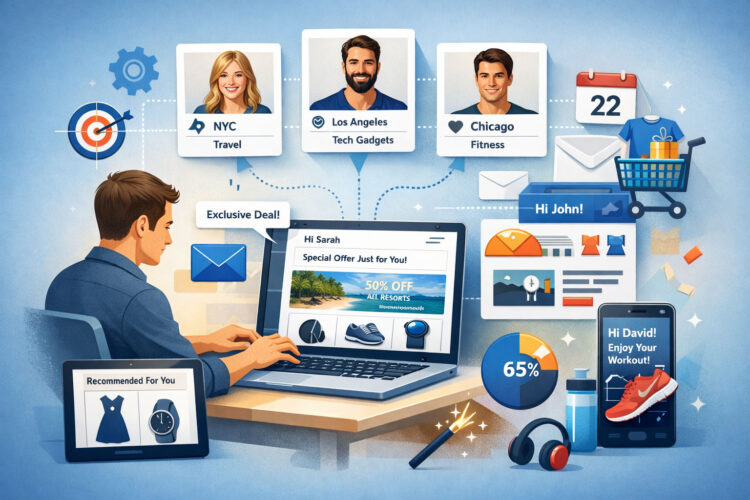
Email marketing remains a cornerstone of digital communication, but its effectiveness is increasingly tied to its relevance. Generic mass emails are routinely overlooked or deleted, failing to resonate with recipients. To counter this, you must master the art of email personalization and dynamic content. This approach moves beyond simply addressing recipients by name, delving into a sophisticated understanding of their preferences, behaviors, and needs to deliver highly tailored communications. By implementing these strategies, you can significantly enhance engagement, build stronger customer relationships, and drive substantial results.
Effective personalization is not a superficial addition; it’s a strategic imperative. It’s about creating a unique and relevant experience for each individual subscriber, making them feel valued and understood. This goes beyond basic data points and taps into the deeper nuances of their interactions with your brand.
Beyond the First Name
While addressing a recipient by their first name is a starting point, it’s no longer sufficient for impactful personalization. Today’s subscribers expect more. Consider how you can integrate additional basic demographic information. What is their general location? What are their declared interests? This foundational data, often collected during signup or through preference centers, provides a broad-stroke understanding initially. However, the true power of personalization lies in leveraging data that goes beyond these surface-level details.
Leveraging Behavioral Data
The most potent form of personalization stems from behavioral data. This encompasses the actions your subscribers take, or don’t take, within your emails, on your website, and across other digital touchpoints. Every click, every page view, every purchase, and every abandoned cart leaves a digital footprint that can be analyzed and utilized. Are they consistently browsing a particular product category? Have they downloaded a specific whitepaper? Have they opened previous emails on a certain topic but ignored others? This data provides a rich tapestry of insights into their genuine interests and needs. By observing these patterns, you can infer their preferences and tailor your communication to align with them.
Psychographic Segmentation
While behavioral data tells you what someone does, psychographic segmentation attempts to understand why they do it. This involves grouping subscribers based on their attitudes, values, lifestyles, and personality traits. For example, are they early adopters seeking innovation, or are they more cautious and value reliability? Are they price-sensitive, or do they prioritize quality above all else? This data is often harder to collect directly but can be inferred from survey responses, social media activity, and the types of content they engage with. Understanding these underlying motivations allows you to craft messages that resonate on a deeper, more emotional level.
Implementing Dynamic Content Effectively
Dynamic content is the engine that drives advanced personalization. It allows you to automatically alter sections of an email message based on predefined rules and subscriber data, ensuring that each recipient receives a version optimized for them. This moves beyond static, one-size-fits-all emails to truly adaptive communication.
Content Block Personalization
One of the simplest yet most effective ways to utilize dynamic content is through content block personalization. Instead of sending an identical email to everyone, you can swap out entire sections based on a subscriber’s profile or recent activity. For instance, an e-commerce brand might showcase different product recommendations to a customer who recently purchased sports equipment versus one who bought home décor items. A software company might display case studies relevant to manufacturing clients for one segment, and financial services clients for another. This ensures that the most relevant information is presented upfront, reducing the effort required for the recipient to find what interests them.
Personalizing Calls to Action (CTAs)
Your Calls to Action (CTAs) are critical for driving desired subscriber actions. Generic CTAs like “Learn More” or “Shop Now” can be made significantly more impactful through dynamic personalization. Instead of a universal CTA, you can adapt it to reflect a subscriber’s specific interests or stage in their journey. For example, if a subscriber has viewed specific product pages but not purchased, the CTA could become “Complete Your Purchase” or “View {{Product Name}}.” If they have downloaded an introductory guide, the CTA could be “Schedule a Demo” or “Explore Advanced Features.” This level of tailored guidance makes the next logical step explicit and inviting.
Subject Line and Preheader Optimization
The subject line and preheader are your gateway to an open. Dynamic content can dramatically improve open rates by making these elements highly relevant to the individual. Incorporate their name, a recent product they viewed, or a topic they’ve shown interest in. For example, instead of “New Arrivals This Week,” try “{{First Name}}, Check Out Our New {{Product Category}} Picks!” or “Your Cart Awaits – Don’t Miss Out!” The goal is to immediately capture their attention by signaling that the email contains information directly pertinent to their needs or past actions. This personal connection, even before opening the email, significantly increases the likelihood of engagement.
Leveraging Data for Advanced Personalization

The effectiveness of your personalization efforts is directly proportional to the quality and depth of your data. You must collect, organize, and analyze subscriber data systematically to unlock the full potential of dynamic content. Without robust data, your attempts at personalization will remain superficial.
Data Collection Strategies
Your data collection strategy should be multifaceted and ethical. Beyond the initial signup form, consider how you can enrich your subscriber profiles over time. Implement preference centers where subscribers can explicitly state their interests. Track website behavior using cookies and pixels to understand browsing patterns and purchase history. Integrate data from your CRM, customer support interactions, and offline purchases. Conduct surveys to gather direct feedback on preferences and needs. Ensure you are transparent about your data collection practices and provide clear opt-out options, building trust with your audience.
Segmentation Beyond Demographics
While demographic segmentation provides a basic framework, true advanced personalization requires going deeper. Move beyond age, gender, and location to segment based on behavior, purchase history, engagement levels, and lifecycle stage. For instance, create segments for “high-value loyal customers,” “at-risk churn customers,” “recent first-time buyers,” or “subscribers interested in {{specific topic}}.” Each of these segments will require different messaging strategies and content. The more granular your segmentation, the more precise and effective your personalization can become.
A/B Testing Personalization Elements
Do not assume what personalization tactics will work best. A/B testing is crucial for optimizing your personalized content. Test different dynamic elements against static ones, or test variations of personalized content. For example, test a subject line with a personalized product recommendation against one with a generic offer. Test a dynamic content block featuring a recently viewed item against one with a broadly popular product. Analyze the results to understand which approaches resonate most effectively with your audience segments. Continual testing and refinement are essential for maximizing the impact of your personalization efforts. Incrementally improving your open rates, click-through rates, and conversion rates through testing will yield significant long-term gains.
Avoiding Common Personalization Pitfalls
While the benefits of personalization are clear, there are several common mistakes that can undermine your efforts. Being aware of these pitfalls will help you navigate the process more effectively and maintain a positive relationship with your subscribers.
Over-Personalization and Creepiness
There’s a fine line between helpful personalization and intrusive “creepiness.” Avoid using data in ways that suggest you know too much about your subscribers or that their privacy has been breached. For example, referencing a very specific item they viewed for only a few seconds might feel overly intrusive. Focus on broad interests, recent actions, and stated preferences rather than attempting to predict their every thought. The goal is to facilitate their journey, not to make them feel surveilled. Err on the side of caution when in doubt, and prioritize the customer’s comfort.
Data Accuracy and Inconsistencies
Incorrect or outdated data can lead to embarrassing and counterproductive personalization. Addressing a recipient by the wrong name, recommending a product they just purchased, or sending offers for services they no longer use will quickly erode trust. Implement robust data validation processes and regularly clean your email lists. Ensure your integrations between various data sources are functioning correctly. A personalized message that is factually incorrect is often worse than no personalization at all, as it highlights a lack of attention to detail and a disregard for their information.
Neglecting the Customer Journey
Personalization should not be a standalone tactic; it must be integrated into the customer journey. Sending personalized emails without considering where the subscriber is in their interaction with your brand can lead to disjointed and irrelevant communication. For example, you wouldn’t send a “welcome back” email to a new subscriber or a “first purchase discount” to a loyal customer. Map out your customer journeys and identify key touchpoints where personalized content can add value. Tailor your messaging not just to their identity, but to their current context and needs within their journey. This ensures continuity and relevance in your communication strategy.
Measuring and Optimizing Personalization Efforts
| Chapter | Metrics |
|---|---|
| Chapter 1 | Open Rate |
| Chapter 2 | Click-Through Rate |
| Chapter 3 | Conversion Rate |
| Chapter 4 | Personalization Techniques |
| Chapter 5 | Dynamic Content Strategies |
Personalization is not a one-time setup; it is an ongoing process of measurement, analysis, and refinement. To ensure your efforts are yielding the desired results, you must establish clear metrics and regularly evaluate your performance. This iterative approach allows you to continuously improve your strategy.
Key Performance Indicators (KPIs)
To gauge the effectiveness of your personalization strategies, track specific Key Performance Indicators (KPIs). Beyond basic open and click-through rates, which are often positively impacted by personalization, delve deeper. Monitor conversion rates for personalized emails versus generic ones. Track average order value for segments receiving personalized product recommendations. Measure reactivation rates for loyalty programs communicated through personalized messages. Assess unsubscribe rates for personalized campaigns to ensure you are avoiding creepiness or irrelevance. Pay attention to engagement metrics within the email itself, such as scroll depth or time spent reading.
A/B Testing Personalized Variations
As mentioned earlier, A/B testing is not just for initial implementation; it’s for continuous optimization. Regularly test variations of your personalized content. For example, try different personalized subject line formulas. Test alternative dynamic content blocks for specific segments. Experiment with the placement and emphasis of personalized elements within your email templates. Small incremental improvements can lead to significant gains over time. Document your tests, analyze the results, and apply your learnings to future campaigns. This systematic approach ensures that you are always refining your strategy.
Feedback Loops and Iteration
Establish feedback loops to understand how your subscribers perceive your personalized content. This can include direct surveys asking about their preferences, analyzing customer service inquiries related to email content, or monitoring social media sentiment. Use this feedback, combined with your KPI analysis, to inform your next round of iterations. Personalization is an ongoing conversation with your audience. You must be prepared to listen, adapt, and refine your approach based on what you learn. The landscape of customer expectations is constantly evolving, and your personalization strategy must evolve with it to remain effective.
By systematically applying these principles, you can transform your email marketing from a broadcast channel into a highly effective, individualized communication tool. This strategic shift will not only improve your email marketing metrics but also foster stronger, more valuable relationships with your audience.
FAQs
What is email personalization?
Email personalization is the practice of creating and sending customized email content to individual recipients based on their preferences, behavior, and demographics. This can include using the recipient’s name, past purchase history, location, and other relevant data to tailor the content of the email.
What are the benefits of email personalization?
Email personalization can lead to higher open and click-through rates, increased engagement, improved customer satisfaction, and ultimately, higher conversion rates. By delivering relevant and targeted content, personalized emails can also help build stronger customer relationships and loyalty.
What is dynamic content in email marketing?
Dynamic content in email marketing refers to the ability to display different content to different recipients within the same email, based on their unique characteristics or behavior. This can include showing different product recommendations, images, or calls-to-action based on the recipient’s preferences or past interactions with the brand.
How can I implement email personalization and dynamic content in my email marketing strategy?
To implement email personalization and dynamic content, you can start by collecting and segmenting customer data, such as purchase history, browsing behavior, and demographic information. Then, use an email marketing platform that supports dynamic content and personalization features to create and send targeted, customized emails to different segments of your audience.
What are some best practices for email personalization and dynamic content?
Some best practices for email personalization and dynamic content include using a clear and compelling subject line, personalizing the email with the recipient’s name and relevant information, testing different content variations to optimize performance, and regularly updating customer data to ensure accuracy and relevance. Additionally, it’s important to comply with data privacy regulations and obtain consent for collecting and using customer data for personalization purposes.