

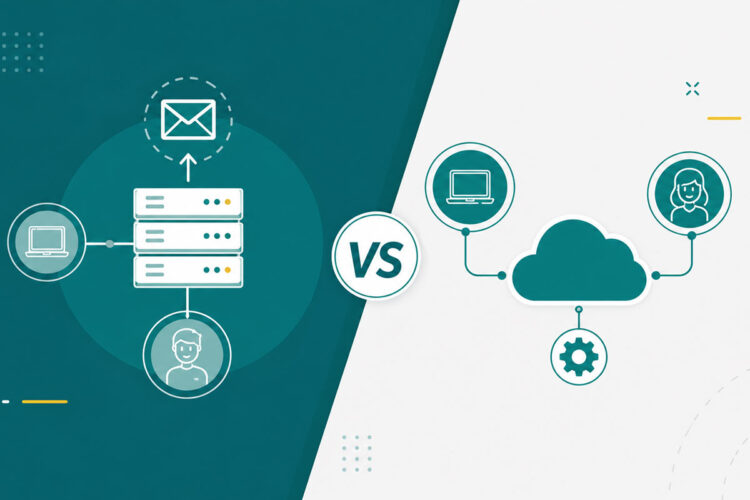
You’re staring at your screen, a critical decision looming. You need to send emails from your application. It sounds simple, right? But the path to reliable email delivery is paved with choices, and two of the most prominent are Email APIs and SMTP. Which one is the right fit for your needs? This isn’t a one-size-fits-all situation. Understanding the nuances of each will determine whether your messages fly with precision or get lost in the digital ether. Let’s break down the options and help you make the best choice for your project.
Sure, you could just spin up a basic mail server and punt emails out via the Simple Mail Transfer Protocol (SMTP). It’s the fundamental language of email. But as you delve deeper, you’ll quickly realize that while SMTP is ubiquitous, it’s not always the most efficient, scalable, or feature-rich solution, especially for modern applications with complex sending requirements. On the other hand, an Email API offers a more streamlined, intelligent, and robust approach. It’s like comparing building your own rudimentary car engine versus driving a sleek, advanced automobile off the lot. Both can get you somewhere, but one will likely offer a far superior journey.
We’ll be diving deep into the core functionalities, the benefits, the drawbacks, and the scenarios where each approach truly shines. By the end of this exploration, you’ll have a clear understanding of what each method entails and how to confidently select the one that aligns perfectly with your application’s current and future demands.
Before we can even begin to choose, you need to grasp what each of these is at its core. Think of it as understanding the basic mechanics before you decide if you need a bicycle, a motorcycle, or a car.
The Classic: Simple Mail Transfer Protocol (SMTP)
SMTP is the agreed-upon standard for sending email messages between servers. It’s been around for a long time, and its fundamental principles are still in play. When your email client sends an email, it typically connects to an SMTP server, provides the sender and recipient information, and then transmits the email content.
How SMTP Works at a Basic Level
Imagine you want to send a letter. You write it, put it in an envelope, address it, and put it in a mailbox. The postal service then takes it from there. SMTP is the digital equivalent.
- Connection: Your application establishes a connection to an SMTP server. This could be your own server, your web host’s server, or a dedicated email sending service.
- Authentication: You’ll likely need to authenticate yourself to the SMTP server using credentials (username and password, or API keys if it’s a service).
- Sender and Recipient Information: You specify the ‘From’ and ‘To’ addresses.
- Email Content: You send the actual email body and headers.
- Delivery: The SMTP server then attempts to deliver the email to the recipient’s mail server.
The Technical Underpinnings of SMTP
SMTP itself is a text-based protocol. This means that communication between your application and the SMTP server happens through a series of commands and responses in plain text.
- Commands: These are specific verbs that tell the server what to do, such as
HELO(hello),MAIL FROM:(specify sender),RCPT TO:(specify recipient), andDATA(start sending the email body). - Responses: The server responds with numeric codes (e.g.,
250 OK,550 User unknown) and brief text messages to indicate success or failure.
The complexity arises when you consider the entire email delivery pipeline. SMTP is just one part of it. After your SMTP server sends the email, it hits the recipient’s mail server, which then performs its own checks before delivering it to the recipient’s inbox.
The Modern Approach: Email APIs
An Email API (Application Programming Interface) is a set of defined rules and protocols that allows your application to communicate with an email sending service. Instead of directly interacting with the intricacies of SMTP, you’re essentially talking to a pre-built, sophisticated system that handles the email sending for you.
What an Email API Abstracted Away
Think of an API as a polished interface that hides a lot of the underlying complexity. With an Email API, you’re not concerned with managing SMTP servers, IP reputation, or complex delivery protocols.
- Simplified Sending: You send requests to the API endpoint with the necessary email details (recipient, subject, body, attachments, etc.).
- Managed Infrastructure: The API provider takes care of all the server management, scaling, and maintenance.
- Advanced Features: APIs often come with built-in features like templating, analytics, webhook integrations, and robust error handling.
The Structure of an Email API Request
API requests are typically made using standard web protocols, most commonly HTTP. You’ll send data in formats like JSON or form data.
- HTTP Methods: You’ll use methods like
POSTto send email creation requests. - API Endpoints: These are specific URLs that your application targets for different actions (e.g.,
/mail/send). - Request Body: This contains all the information about the email you want to send, structured in a predefined format (e.g., a JSON object with keys for
to,from,subject,text,html). - API Keys: You’ll use a unique API key for authentication, passed in headers or as a query parameter.
Comparing the Core Functionalities and Features
Now that you understand the basics, let’s get into the nitty-gritty of what each method offers in terms of features and how they handle various aspects of email sending.
Sending Protocols and Infrastructure
This is where the fundamental differences become most apparent.
SMTP: Direct Server Interaction
When you use SMTP directly, you are responsible for managing the connection and the server that handles the email transmission.
- Server Management: You might need to set up and maintain your own SMTP server (e.g., Postfix, Sendmail) or use the SMTP relay provided by your hosting provider.
- IP Reputation: You are directly responsible for the IP address from which your emails are sent. This means a bad sender reputation can lead to your emails being blocked or marked as spam.
- Scalability: Scaling your own SMTP infrastructure to handle high volumes of email can be a significant technical undertaking, requiring careful planning for server resources, load balancing, and redundancy.
- Deliverability: Achieving good deliverability with direct SMTP often involves deep technical knowledge of DNS records (SPF, DKIM, DMARC), IP warming strategies, and constant monitoring of bounce rates and spam complaints.
Email APIs: Managed and Optimized Infrastructure
Email API providers have invested heavily in optimizing their infrastructure for maximum deliverability and scalability.
- Managed Servers: The API provider handles all aspects of server maintenance, security, and updates.
- IP Pools: They manage large pools of IP addresses, often segmented by sender reputation, to optimize delivery. They actively manage IP warming and reputation to ensure your emails reach the inbox.
- Global Infrastructure: Many API providers have a global network of servers, which can improve sending speed and reliability for recipients worldwide.
- Built-in Deliverability Tools: They often include automatic SPF, DKIM, and DMARC setup assistance and continuous monitoring to ensure compliance and maintain a good sending reputation.
Ease of Implementation and Development Effort
This is a crucial consideration for developers, as it directly impacts project timelines and resource allocation.
SMTP: Steeper Learning Curve
While sending a simple email via SMTP might seem straightforward, implementing robust, scalable, and highly deliverable email sending with it requires significant development effort and specialized knowledge.
- Libraries and SDKs: You’ll need to use SMTP client libraries available for your programming language (e.g.,
smtplibin Python,Nodemailerin Node.js). - Configuration Complexity: Setting up a reliable SMTP connection often involves configuring ports, encryption (TLS/SSL), authentication methods, and potentially dealing with firewall issues.
- Error Handling: You’ll need to implement comprehensive error handling logic to manage connection failures, authentication issues, and delivery errors reported by the receiving mail server.
- Advanced Features Implementation: Implementing features like email templating, attachment handling, dynamic content, and analytics would require building these functionalities from scratch or integrating multiple libraries, which can be time-consuming.
Email APIs: Streamlined Development
Email APIs are designed to abstract away the complexities of email sending, allowing developers to focus on their core application logic.
- Simple API Calls: Sending an email typically involves a single, straightforward API call with the necessary parameters.
- Well-Documented SDKs: Most API providers offer well-maintained Software Development Kits (SDKs) for various programming languages, further simplifying integration.
- Rapid Prototyping: You can get email sending up and running very quickly, accelerating your development cycle.
- Pre-built Functionality: Features like templating engines, attachment management, bulk sending, and unsubscribe handling are often provided out-of-the-box, saving you significant development time.
Scalability and Volume Handling
How will your chosen method cope as your email sending needs grow?
SMTP: Manual Scaling Challenges
Scaling an SMTP-based sending system is often an exercise in managing server infrastructure.
- Resource Management: As your email volume increases, you’ll need to provision more server resources, including CPU, memory, and network bandwidth.
- Load Balancing: To handle high traffic, you’ll need to implement load balancing solutions to distribute outgoing email traffic across multiple servers.
- Queue Management: You might need to develop or integrate sophisticated queueing systems to manage the flow of outgoing emails and prevent server overload.
- Deliverability at Scale: Maintaining good deliverability becomes exponentially harder at scale, as you have more IPs to manage and a larger surface area for potential reputation issues.
Email APIs: Elastic and Automatic Scaling
Email API providers are built for scale. They manage the underlying infrastructure to handle massive email volumes effortlessly.
- Cloud-Based Infrastructure: They leverage distributed cloud infrastructure that can automatically scale up or down based on demand.
- High Throughput: API services are engineered for high throughput, capable of sending millions of emails per day without performance degradation.
- No Infrastructure Management: You don’t need to worry about adding servers, configuring load balancers, or managing queues. The API provider handles it all.
- Consistent Performance: You can rely on consistent sending speeds and deliverability, regardless of your email volume, as long as you adhere to best practices.
Advanced Features and Functionality
Beyond just sending an email, what else can you do?
SMTP: DIY or Third-Party Integrations
Implementing advanced features with direct SMTP involves significant custom development.
- Templating: You’d need to build your own templating engine or rely on libraries to generate dynamic email content.
- Analytics and Tracking: Tracking opens, clicks, and bounces would require building custom tracking mechanisms or integrating with separate analytics services.
- Webhooks: Setting up server-side listeners to receive delivery status updates (webhooks) would be a complex development task.
- Unsubscribe Management: Implementing a robust and compliant unsubscribe mechanism requires careful management of subscriber lists and opt-out processes.
Email APIs: Feature-Rich Ecosystems
Email APIs offer a comprehensive suite of features designed to enhance your email sending workflow.
- Sophisticated Templating: Most services offer powerful templating engines that support variables, conditional logic, and dynamic content generation.
- Built-in Analytics: Track key metrics like delivery rates, open rates, click-through rates, and spam complaints directly through the API or dashboard.
- Real-time Webhooks: Receive instant notifications about email events (sent, delivered, opened, clicked, bounced, complained) to trigger automated actions in your application.
- Automated Unsubscribe Handling: Most APIs provide built-in mechanisms for handling unsubscribe requests, ensuring compliance with anti-spam regulations (e.g., GDPR, CAN-SPAM).
- A/B Testing: Some advanced APIs support A/B testing of email content and subject lines to optimize engagement.
- Segmentation: Tools for segmenting your audience based on user data for targeted campaigns.
When to Choose SMTP: Specific Use Cases

While Email APIs are the go-to for most modern applications, there are indeed scenarios where leveraging SMTP directly can be the more appropriate choice, or at least a necessary component.
For Simple, Low-Volume Sending Within a Trusted Network
If your needs are exceptionally basic and your email sending volume is very low, direct SMTP might suffice.
- Internal Notifications: Sending occasional system alerts or notifications between internal servers or to a very small, trusted list of users.
- Development and Testing: During the early stages of development, you might use a local SMTP server or a basic relay to test email functionality without incurring costs or setting up complex integrations.
- Simple Scripts: For small, standalone scripts that need to send a few emails a day, a direct SMTP connection can be a quick solution.
When You Have Absolute Control and Expertise
If you possess deep knowledge of email infrastructure, deliverability, and server management, and require granular control over every aspect of the sending process, you might opt for direct SMTP.
- Specialized Infrastructure Requirements: In rare cases, specific security or compliance mandates might necessitate managing your own email infrastructure end-to-end.
- Highly Optimized Performance Tuning: If you have a dedicated team of email deliverability experts who can meticulously tune every server and IP, you might achieve slightly better performance in niche scenarios.
- Cost Optimization for Extremely High Volumes (Potentially): For exceptionally massive and consistent email volumes, and if you have the expertise to manage infrastructure efficiently, the per-email cost could be lower with self-managed SMTP compared to some API tiers, but this is a complex calculation and often not the case in practice.
Integrating with Existing SMTP Infrastructure
You might encounter situations where your organization already has a sophisticated SMTP infrastructure in place that you need to integrate with.
- Leveraging Existing Mail Servers: If your company uses a centralized mail server for all outgoing communications, you’ll likely need to configure your application to use that existing SMTP relay.
- Compliance and Policy Adherence: Your organization’s IT policies might dictate the use of approved mail servers, which likely operate via SMTP.
When to Choose Email APIs: The Dominant Choice for Most

For the vast majority of applications, especially those that are web-based, handle user communication, or require robust email functionality, an Email API is the superior choice. Here’s why.
Business-Critical Transactional Emails
When your emails are essential for your business operations, deliverability and reliability are paramount.
- Order Confirmations: Ensuring customers receive their order details promptly and reliably is crucial for customer satisfaction and reducing support inquiries.
- Password Resets: A broken password reset system can lead to frustrated users and abandoned accounts. APIs ensure these critical emails reach their destination.
- Account Verification: For user onboarding, confirming email addresses is a vital security step that relies on successful email delivery.
- Shipping Notifications: Keeping customers informed about their order status builds trust and reduces anxieties.
Marketing and Engagement Campaigns
For sending mass emails to engage your audience, APIs offer features that are indispensable.
- Personalized Marketing Messages: APIs allow for dynamic content and templating to create highly personalized messages for individual customers.
- Newsletters and Updates: Efficiently sending newsletters to large subscriber lists requires a scalable and reliable sending solution.
- Promotional Offers: Delivering marketing promotions effectively hinges on high deliverability rates.
- Automated Email Sequences: APIs are essential for building automated email workflows, such as welcome series, re-engagement campaigns, and nurturing sequences.
Applications Requiring High Scalability and Performance
As your user base or sending volume grows, an API will effortlessly keep pace.
- SaaS Products: Software-as-a-Service platforms that need to communicate with a large and growing user base.
- E-commerce Platforms: Businesses that send a high volume of transactional emails and marketing campaigns.
- Social Networks and Community Platforms: Applications that generate a lot of user notification emails.
- Onboarding Processes: Streamlining user onboarding with automated welcome emails and verification messages.
Developers Prioritizing Speed and Simplicity
If you want to get email functionality working quickly and with minimal development overhead, APIs are the clear winner.
- Startups and Small Businesses: For businesses with limited development resources, APIs offer a fast path to robust email capabilities.
- Rapid Prototyping: Quickly integrating email sending into new features or products to test concepts.
- Focus on Core Product: Allowing your development team to concentrate on building your core application’s unique features rather than managing email infrastructure.
Key Considerations for Making Your Decision
| Metrics | Email APIs | SMTP |
|---|---|---|
| Reliability | High | Depends on server |
| Integration | Easy with APIs | Requires server setup |
| Scalability | Highly scalable | May require additional setup |
| Customization | Flexible | Limited |
| Delivery Rate | Depends on provider | Depends on server reputation |
Beyond the core features, there are several other factors you should weigh when deciding between SMTP and an Email API. These will help you make a more informed and future-proof choice.
Cost Structure
How will your chosen method impact your budget, both now and in the future?
SMTP: Infrastructure and Maintenance Costs
When you manage your own SMTP infrastructure, the costs are indirect and can be significant.
- Server Hardware/Cloud Hosting: You’ll be paying for physical servers or cloud instances, bandwidth, and storage.
- Maintenance and Administration: The cost of skilled IT personnel to set up, monitor, secure, and maintain the SMTP servers.
- IP Address Management: Acquiring and managing dedicated IP addresses can incur costs, and potential blockages can lead to lost revenue.
- Deliverability Expert Time: If you need to hire specialists to ensure high deliverability, this adds to your overhead.
- Software Licenses: Some SMTP server software might require licenses.
Email APIs: Transactional Pricing and Feature Tiers
Email API providers typically offer tiered pricing based on your sending volume and the features you require.
- Pay-as-you-go: Many services offer a per-email pricing model, making it predictable for small to medium volumes.
- Monthly/Annual Plans: For higher volumes, dedicated plans with bulk discounts are often available.
- Feature-Based Tiers: Higher-priced tiers might offer more advanced features, dedicated support, or higher sending limits.
- Free Tiers: Most providers offer generous free tiers, allowing you to test their service extensively.
- Predictable Costs: The cost is generally more predictable and scales linearly with your usage.
Support and Reliability
What happens when things go wrong?
SMTP: Self-Reliance or Limited Support
If you manage your own SMTP server, you are entirely responsible for troubleshooting and support.
- DIY Troubleshooting: You’ll rely on your internal IT team or community forums for support.
- Downtime Responsibility: Any downtime or issues with your SMTP server directly impact your ability to send emails.
- Limited Escalation: Without a dedicated support team, it can be difficult to escalate critical issues rapidly.
Email APIs: Dedicated Support and SLAs
Reputable Email API providers offer robust support and often Service Level Agreements (SLAs).
- Technical Support: Access to knowledgeable support staff who can help with integration issues, deliverability concerns, and feature usage.
- Uptime Guarantees: Providers often guarantee high uptime for their services.
- Proactive Monitoring: They actively monitor their infrastructure to prevent and resolve issues before they affect users.
- Extensive Documentation and Resources: Comprehensive documentation, tutorials, and FAQs to aid in integration and troubleshooting.
Maintainability and Future-Proofing
How easy will it be to manage and update your email sending solution over time?
SMTP: Technical Debt and Obsolescence Risks
Maintaining your own SMTP infrastructure can lead to technical debt and potential obsolescence.
- Ongoing Maintenance: Regular updates, security patching, and server reconfigurations are required.
- Scalability Hurdles: Future scaling can involve complex hardware upgrades or re-architecting your system.
- Evolving Standards: Keeping up with ever-changing email deliverability standards and protocols can be a constant battle.
- Skillset Dependency: Your ability to maintain the system is tied to the availability of skilled personnel familiar with your specific setup.
Email APIs: Managed Evolution and Innovation
Email API providers are constantly innovating and updating their platforms.
- Automatic Updates: You benefit from the latest features, security patches, and deliverability improvements without any effort on your part.
- Seamless Upgrades: As your needs grow, you can easily upgrade to higher tiers or leverage new features as they become available.
- Focus on Core Business: You can allocate your development resources to building and improving your core product, rather than managing email infrastructure.
- Industry Leadership: API providers are typically at the forefront of email deliverability best practices and technology.
The Verdict: When to Use Which
After dissecting the pros and cons, the path forward becomes clearer. While SMTP still has its place in specific, niche scenarios, for the vast majority of modern applications, an Email API is the unequivocally better choice.
Embrace Email APIs for:
- Transactional Emails: Order confirmations, password resets, account verifications, shipping notifications.
- Marketing and Engagement: Newsletters, promotional campaigns, automated email sequences.
- High-Volume Sending: Any application expecting significant growth in email traffic.
- Rapid Development: When you need to implement email functionality quickly and efficiently.
- Reliability and Deliverability: When ensuring your emails reach the inbox is paramount for your business.
- Scalability: When you anticipate your sending needs to grow exponentially.
- Developer Productivity: When you want your team to focus on building your product, not maintaining email servers.
Consider Direct SMTP For:
- Very Low-Volume, Internal Notifications: Sending occasional alerts within a trusted internal network where deliverability to external spam filters isn’t a concern.
- Extremely Specific Infrastructure Control: In rare instances where regulatory or security requirements mandate complete self-management and you have the necessary expertise.
- Integration with Existing, Well-Managed SMTP Infrastructure: If your organization has a pre-existing, robust, and compliant SMTP solution that you are mandated to use.
- Simple Scripting for Personal Projects: For individual scripts with minimal sending needs and where cost and complexity are primary concerns (though even here, free tiers of APIs are often simpler).
Ultimately, the choice between Email APIs and SMTP hinges on your specific project requirements, technical resources, budget, and long-term goals. However, in today’s landscape of complex email deliverability, robust feature sets, and the need for scalable solutions, Email APIs offer a significantly more advantageous and efficient path for most. They provide the tools and infrastructure to ensure your messages are not just sent, but delivered reliably and effectively, empowering your application to communicate with its users seamlessly. Make the smart choice, and let your emails do the work they’re intended to do.
FAQs
What is an Email API?
An Email API is a set of rules and protocols that allows different software applications to communicate with each other to send and receive emails. It provides a more flexible and customizable way to send emails compared to traditional SMTP.
What is SMTP?
SMTP stands for Simple Mail Transfer Protocol and is the standard protocol used for sending emails over the internet. It is a basic method of sending emails and is widely used by email clients and servers.
What are the advantages of using an Email API over SMTP?
Using an Email API allows for more advanced features such as tracking, analytics, and personalization. It also provides better deliverability and scalability compared to SMTP. Additionally, Email APIs offer more control and customization options for sending emails.
When should I use SMTP for sending emails?
SMTP is suitable for basic email sending needs, such as sending transactional emails or simple notifications. It is also a good option for smaller-scale email sending where advanced features and customization are not required.
When should I use an Email API for sending emails?
An Email API is ideal for businesses and organizations that require advanced email sending capabilities, such as tracking, analytics, personalization, and scalability. It is also suitable for sending large volumes of emails and for integrating email sending with other software applications.