
Customer retention is a critical aspect of business sustainability. Instead of solely focusing on customer acquisition, which can be costly, businesses increasingly prioritize keeping existing customers engaged and purchasing. Lifecycle email automation, a strategy employing automated email sequences triggered by customer actions or specific timeframes, serves as a powerful tool in this endeavor. This article outlines the mechanisms and benefits of leveraging lifecycle email automation to enhance customer retention.
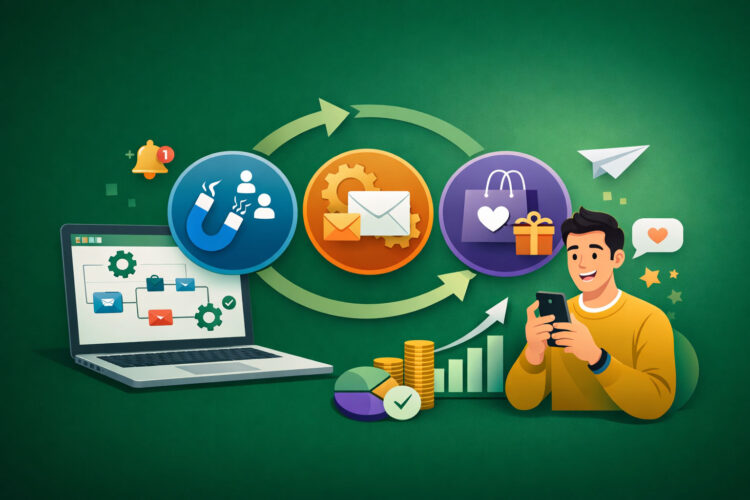
Lifecycle email automation refers to the process of sending targeted, automated emails to individuals at various stages of their customer journey. This approach moves beyond generic newsletters, instead delivering relevant content based on user behavior, preferences, and interactions with a business. Think of it as a personalized communication flow, adapting to the customer’s changing relationship with your brand.
The Customer Lifecycle Stages
The customer lifecycle typically involves several distinct stages, each presenting unique opportunities for email engagement:
- Awareness: The initial stage where a potential customer learns about your product or service. While primarily an acquisition stage, early engagement can set the retention foundation.
- Consideration: The customer is actively evaluating options and comparing your offerings with competitors.
- Purchase/Conversion: The customer completes a transaction, becoming a first-time buyer.
- Onboarding: The period immediately following a purchase, crucial for guiding new customers and ensuring successful product adoption.
- Retention: The ongoing phase where the goal is to encourage repeat purchases, foster loyalty, and prevent churn.
- Advocacy: Loyal customers become promoters, recommending your brand to others.
The Role of Automation
Automation in this context means setting up predefined email sequences that trigger automatically when specific conditions are met. This eliminates the need for manual email sending, ensuring timely and consistent communication. For instance, a “welcome” email sequence might automatically send upon sign-up, while a “win-back” series could trigger after a period of inactivity.
In exploring the significance of lifecycle email automation in enhancing customer retention, it’s also valuable to consider the insights provided in the article on “The Impact of Personalized Marketing on Customer Loyalty.” This article delves into how tailored marketing strategies can foster deeper connections with customers, ultimately leading to increased loyalty and retention rates. For further reading, you can access the article here: The Impact of Personalized Marketing on Customer Loyalty.
Designing Effective Lifecycle Email Sequences
Creating effective lifecycle email sequences requires careful planning and a clear understanding of your customer base. Each email should have a specific objective and contribute to the overarching goal of retention.
Mapping the Customer Journey
Before constructing email sequences, you must thoroughly map your customer journey. This involves identifying key touchpoints, potential pain points, and critical moments where communication can influence customer behavior. Consider what information a customer needs at each stage and what actions you want them to take. For example, after a purchase, the customer might need instructions on using the product, followed by an invitation to join your community.
Setting Clear Objectives for Each Email
Every email within a sequence should have a defined purpose. Is it to welcome a new subscriber, provide product education, offer a discount for a repeat purchase, or solicit feedback? Clearly articulated objectives allow for focused content creation and provide measurable metrics for success. An email intended to cross-sell, for instance, will differ significantly from one designed to encourage a product review.
Crafting Compelling Content
The content of your emails is paramount. It must be relevant, valuable, and engaging. Generic or overly promotional emails risk being ignored or marked as spam. Instead, focus on providing solutions, sharing helpful information, and building a relationship. Personalization, beyond simply using the customer’s name, significantly enhances engagement. This can involve referencing their past purchases, browsing history, or stated preferences.
- Personalization: Leverage data to make emails feel one-on-one. This extends beyond merely using a customer’s first name; it involves tailoring content, product recommendations, and offers based on their historical interactions.
- Value Proposition: Clearly articulate what the customer gains from reading the email or taking the suggested action. This could be information, a discount, or a solution to a problem.
- Call to Action (CTA): Each email should have a clear, concise call to action. What do you want the recipient to do next? “Shop Now,” “Learn More,” “Give Feedback” are examples.
Key Lifecycle Email Types for Retention
Several types of automated email sequences are particularly effective for customer retention. These act as the individual gears in the retention machine, each performing a specific function.
Welcome Series
A welcome series is the first formal communication a new subscriber or customer receives. It sets the tone for future interactions and is crucial for creating a positive initial impression. This series typically spans several emails, aiming to onboard the customer and introduce them to your brand’s value.
- Email 1: Immediate Welcome: A warm greeting, confirmation of subscription or purchase, and a brief introduction to your brand’s mission.
- Email 2: Value Proposition & Education: Highlight key benefits, provide useful resources, or explain how to get started with your product/service.
- Email 3: Next Steps & Community: Encourage further engagement, perhaps by inviting them to follow on social media or explore other relevant content.
Onboarding Series
For products or services requiring a learning curve, an onboarding series guides new customers through the initial setup and usage. This minimizes frustration and increases the likelihood of successful product adoption, which is a strong predictor of long-term retention.
- Tutorials and Guides: Step-by-step instructions for using key features.
- Tips and Best Practices: Advice on getting the most out of the product.
- Common FAQs: Addressing anticipated questions to prevent customer support inquiries.
Re-Engagement/Win-Back Series
Customers may become inactive for various reasons. A re-engagement or win-back series aims to reactivate these dormant customers and persuade them to return. This is often triggered after a specified period of inactivity (e.g., 30, 60, or 90 days without a purchase or interaction).
- Gentle Nudge: A polite check-in, reminding them of your brand and perhaps a new feature.
- Incentive Offer: A discount, special promotion, or exclusive content designed to entice them back.
- Feedback Request: A request for feedback on why they became inactive, providing valuable insights for improvement.
Post-Purchase/Cross-Sell/Upsell Series
After a customer makes a purchase, the relationship doesn’t end. This series capitalizes on their recent positive experience to encourage further engagement and additional purchases.
- Order Confirmation & Shipping Updates: Essential transactional emails building trust.
- Product Usage Tips: Helping them maximize their recent purchase.
- Related Product Recommendations: Suggesting complementary items based on their purchase history, essentially guiding them through a curated shopping experience.
- Request for Review/Feedback: Encouraging user-generated content and valuable insights.
Loyalty & Anniversary Programs
Acknowledging customer loyalty and celebrating milestones strengthens the emotional connection with your brand. These emails foster a sense of appreciation and encourage continued patronage.
- Anniversary Emails: Celebrating a customer’s subscription or purchase anniversary with a personalized message or special offer.
- Loyalty Rewards: Announcing points earned, upcoming rewards, or exclusive access for loyal customers.
- VIP Program Invitations: Inviting high-value customers to exclusive programs with added benefits.
Implementing Lifecycle Email Automation
The practical implementation of lifecycle email automation requires specific tools and a structured approach. It’s not a set-it-and-forget-it endeavor; continuous optimization is key.
Choosing the Right Email Marketing Platform
A robust email marketing platform is essential for successful automation. Look for features such as:
- Segmentation Capabilities: The ability to group subscribers based on various criteria (purchase history, demographics, behavior).
- Automation Workflows: Intuitive tools for designing and managing complex email sequences.
- A/B Testing: The functionality to test different email elements (subject lines, content, CTAs) to optimize performance.
- Analytics and Reporting: Comprehensive data on email open rates, click-through rates, conversions, and unsubscribe rates.
- CRM Integration: Seamless connection with your customer relationship management system for synchronized data.
Data Collection and Segmentation
Effective automation hinges on robust data. Collect relevant customer data through sign-up forms, surveys, purchase history, and website interactions. This data allows for precise segmentation. Instead of broad strokes, imagine painting with a fine brush, delivering highly specific messages to distinct groups.
- Demographic Segmentation: Age, gender, location.
- Behavioral Segmentation: Purchase history, website browsing, email engagement (opens, clicks).
- Psychographic Segmentation: Interests, values, lifestyle (often derived from surveys or inferred behavior).
A/B Testing and Optimization
Lifecycle email automation is an iterative process. Continually test different elements of your emails to identify what resonates best with your audience. This includes:
- Subject Lines: Test different lengths, emojis, and value propositions.
- Call to Action (CTA): Experiment with wording, button color, and placement.
- Email Content: Try variations in messaging, imagery, and layout.
- Send Times: Determine the optimal times for different segments.
Analyze the results of your A/B tests and make data-driven adjustments to your sequences. This continuous loop of testing, analyzing, and optimizing ensures your automation remains effective and relevant.
In exploring the significance of lifecycle email automation in enhancing customer retention, it is also beneficial to consider the insights provided in a related article that discusses the impact of personalized marketing strategies on customer loyalty. This article highlights how tailored communication can significantly improve engagement and retention rates. For more information, you can read the article on personalized marketing strategies here.
Measuring the Impact on Retention
| Metric | Description | Typical Value | Impact on Customer Retention |
|---|---|---|---|
| Open Rate | Percentage of recipients who open lifecycle emails | 40% – 60% | Higher open rates indicate better engagement and increased chances of retention |
| Click-Through Rate (CTR) | Percentage of recipients who click links within lifecycle emails | 10% – 25% | Higher CTR drives more interaction, leading to stronger customer relationships |
| Conversion Rate | Percentage of email recipients who complete a desired action (purchase, signup) | 5% – 15% | Directly contributes to customer retention by encouraging repeat actions |
| Unsubscribe Rate | Percentage of recipients who opt out of emails | Less than 0.5% | Lower rates indicate relevant content, supporting retention efforts |
| Customer Lifetime Value (CLV) Increase | Growth in average revenue generated per customer due to email automation | 10% – 30% increase | Shows long-term retention and loyalty improvements |
| Churn Rate Reduction | Decrease in percentage of customers lost over time | 5% – 20% reduction | Indicates effectiveness of lifecycle emails in keeping customers engaged |
| Response Time | Average time taken for customers to respond to lifecycle emails | Within 24 hours | Faster responses correlate with higher engagement and retention |
To justify the investment in lifecycle email automation, it’s crucial to measure its impact on customer retention. This involves tracking specific metrics and evaluating their trends over time.
Key Performance Indicators (KPIs)
While general email marketing metrics like open rates and click-through rates are important, focus on KPIs directly related to retention:
- Customer Lifetime Value (CLTV): The total revenue a customer is expected to generate throughout their relationship with your brand. An increase in CLTV signifies improved retention.
- Churn Rate: The percentage of customers who stop doing business with you over a specific period. A decrease in churn rate indicates successful retention efforts.
- Repeat Purchase Rate: The percentage of customers who make more than one purchase. Automated emails can significantly influence this metric.
- Time Between Purchases: Shortening the time between purchases suggests increased engagement and satisfaction.
- Customer Engagement Metrics: Beyond opens and clicks, look at website visits originating from emails, time spent on relevant pages, and interactions with in-email surveys or polls.
Attribution Modeling
Understanding which emails contribute to retention requires effective attribution modeling. This involves determining how different touchpoints, including automated emails, influence customer behavior and ultimately leading to retention. Did the win-back email lead to a repurchase, or was it a combination of factors?
By systematically tracking these metrics and refining your email sequences based on performance data, you can maximize the effectiveness of lifecycle email automation in fostering long-term customer relationships and driving sustainable business growth. It’s a continuous journey, much like nurturing a plant, requiring consistent care and attention to yield a flourishing result.
FAQs
What is lifecycle email automation?
Lifecycle email automation is a marketing strategy that uses automated email campaigns tailored to different stages of a customer’s journey. It delivers relevant content based on user behavior, preferences, and interactions to nurture relationships and encourage engagement.
How does lifecycle email automation help in customer retention?
By sending timely and personalized emails, lifecycle email automation keeps customers engaged, provides value, and addresses their needs throughout their relationship with a brand. This consistent communication helps build loyalty, reduces churn, and increases the likelihood of repeat purchases.
What types of emails are commonly used in lifecycle email automation?
Common types include welcome emails, onboarding sequences, product recommendations, re-engagement campaigns, and post-purchase follow-ups. Each type targets specific customer behaviors or lifecycle stages to maintain ongoing engagement.
Can lifecycle email automation improve customer experience?
Yes, by delivering relevant and personalized content automatically, lifecycle email automation enhances the customer experience. It ensures customers receive the right information at the right time, making interactions with the brand more meaningful and convenient.
What metrics should be tracked to measure the effectiveness of lifecycle email automation?
Key metrics include open rates, click-through rates, conversion rates, customer retention rates, and unsubscribe rates. Monitoring these helps marketers understand how well their automated emails are performing and identify areas for improvement.